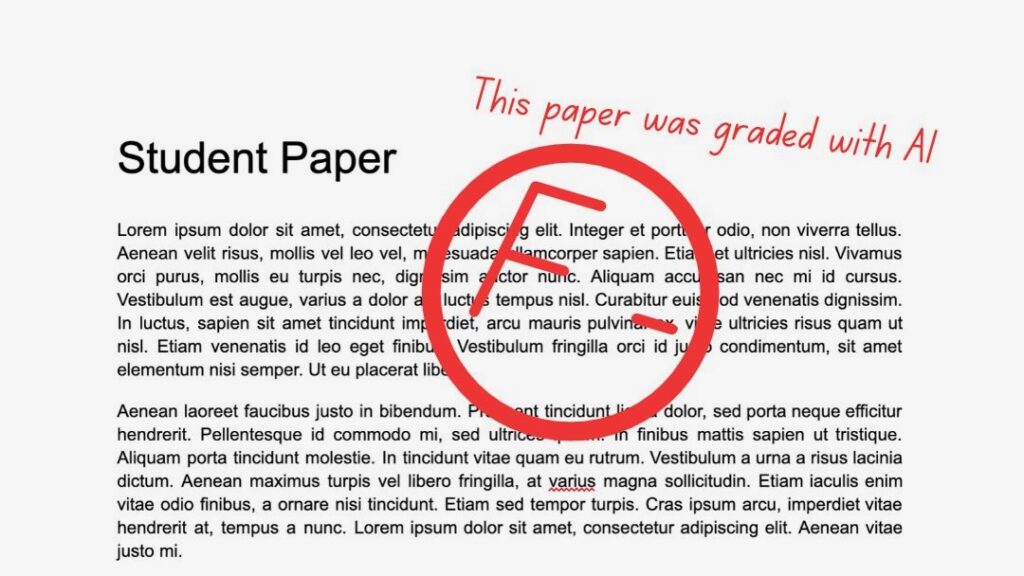
Professors at WSUV are divided between whether to embrace AI in the classroom or reject it entirely. Some acknowledge how it could benefit people in today’s overloaded society, while others worry about copyright infringement and its impact on the environment.
Renny Christopher, an English professor, is greatly concerned with the ethics of data collection conducted by generative AI programs. “They can’t produce anything new; they just reorganize the material they were trained on.”
According to a research guide by NYU Libraries, LLM’s are a more advanced subset of Natural Language Processing (NLP).
Where NLP’s primarily use computational techniques to generate human-like language, LLM’s additionally use large amounts of text data such as books and websites to produce their responses. LLM’s are the foundation of popular generative AI programs like ChatGPT, Copilot, and Gemini.
As such, Renny believes that “all large language models have been trained on works that are copyrighted, and they’re in violation of that copyright.”
Sue Peabody, a Meyer distinguished professor of history, described herself as a “strong critic of AI on multiple levels.” She specifically pointed to its impacts on the environment, such as its contribution to global warming and energy costs.
To combat the increase of AI-use in academia, Peabody has implemented a computer-free environment in her classroom. Adjustments have been made as the semester continues, but she stated that she is “impressed with how well they’re [her students] are responding to this.”
Renny agrees with the sentiment of an AI-free classroom, stating “if you don’t practice writing, it won’t improve.”
Peabody also questions the motivations behind the rapid surge of AI-use in everyday life. “There’s a kind of moment we’re in right now where there’s a lot of pressure to get used to it, get over it—you know, figure it out and use it, and I’m skeptical of that, because it’s coming from the same corporations that are creating it in the first place.”
In contrast, Kaylene Selk, a professor of integrated communications, views AI as beneficial. She has been working in public relations for 20 years and believes that offloading repetitive tasks to AI will allow people to give extra thought and attention to more challenging pursuits.
By eliminating menial tasks and giving people more time to do what they enjoy, she says, “AI is hopefully enabling us to be human.”
WSU’s policy regarding AI follows Washington Administrative Code (WAC) 504-26-202, which classifies “unauthorized use of artificial intelligence to complete course requirements including, but not limited to, papers, homework assignments, and tests” as a form of academic dishonesty and could be grounds for disciplinary action.
Additionally, the Office of the Provost requires all WSU professors to include a statement in each class syllabus to clearly indicate their expectations and policies regarding AI-use in the course.
You may also like
-
The WSU Foundation is Holding a Student Art Contest, and Winners Get 500 Dollars Each
-
Annual Professional Clothing Closet Helps Students Dress for Success
-
Your Voice, Your Vote: How WSUV Students Are Approaching the Midterm Elections
-
Exhibit Artists McKinney and Lam Reflect on Family and Their Art
-
Early FAFSA Launch: What Changes and How This Affects Your Financial Aid