For WSUV junior Jarrell Davis, finding a job on campus would decrease his spending on gas and allow him to stay close to class. Davis qualifies for work-study and hopes to find a position he can keep throughout his time at WSUV. He’s also considering seasonal work over the holidays while he looks for an internship.
Overall, Davis concluded “it would be really convenient to have a work-study job here on campus.”
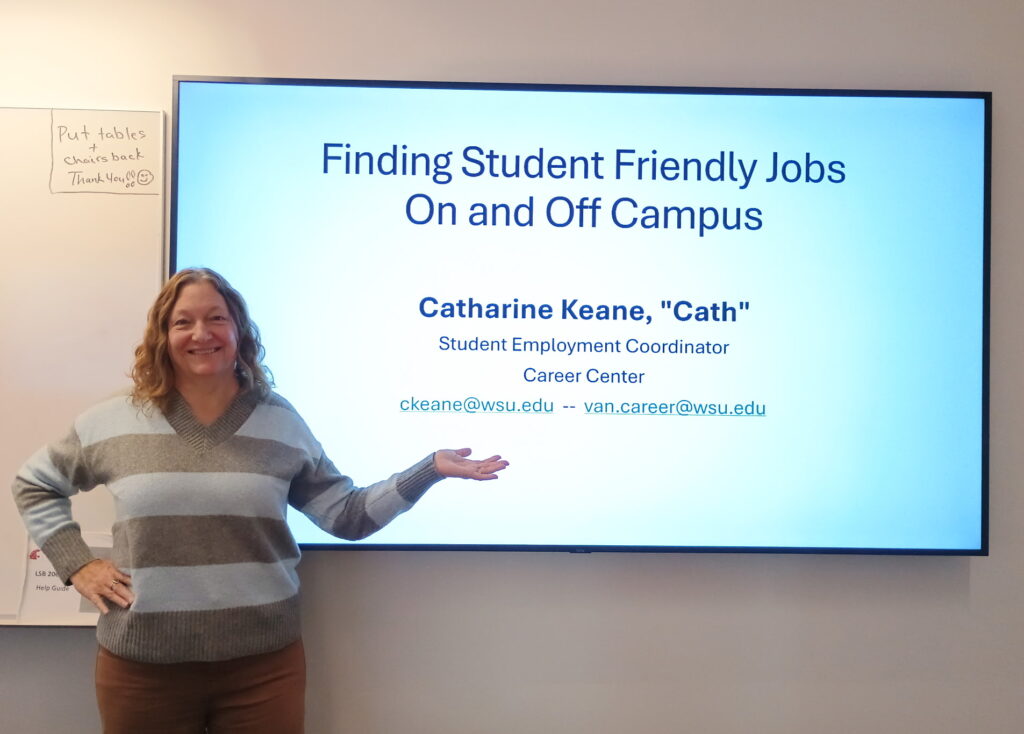
Davis attended “Finding Student Friendly Jobs On and Off Campus,” a workshop held on Tuesday, Nov 17, by Student Employment Coordinator Catharine “Cath” Keane.
The workshop opened by asking students to name three things they wanted from a job, as those priorities can help narrow a search before the first application. Students might need a short commute, predictable hours, or a supervisor who can adjust their shifts when classes change. The workshop described student-friendly jobs as often offering 10 to 20 hours a week and giving students a chance to earn money, build skills, and explore career interests.
Keane encouraged students to check Handshake regularly because campus job postings can have very short application windows, sometimes closing after a week or two. To find them, open the “Jobs” tab, go to WSU Collections, and select “Vancouver On-Campus & Work Study Jobs.”
Campus jobs can include peer mentoring, tutoring, library and IT support, research assistance, and reception work in student services. Keane said that working on campus can make it easier to get from class to a shift and give students opportunities to build relationships with staff and faculty who could serve as references. Department budgets and grants fund some campus jobs. Work-study is a financial aid award that makes eligible students able to apply for designated positions.
Department bulletin boards, campus hiring pop-ups and conversations with faculty and staff are other ways to learn about openings. The workshop slideshow featured the date for the next Work on Campus Job Fair being April 1, 2027.
Alternatively, off-campus jobs can offer more options for evening and weekend shifts. The workshop highlighted grocery stores, coffee shops, childcare programs, recreation facilities, and offices as places to look. Students can filter searches by location, part-time hours, and experience level on employment platforms like Handshake, Indeed, and LinkedIn. They can also check employers’ career pages, contact WorkSource, or ask local businesses directly about openings.
For workshop attendee Ryan Mun, an easy commute and an employer who understands academic demands are priorities. Mun recalled a previous job on Zoom that allowed time for homework between appointments with students. A job related to his studies would be ideal, he said, though he’s open to other work that fits his schedule.
Keane advised students to confirm that an employer can work around their classes before accepting an offer. An interview gives students a chance to ask when schedules are posted, how many hours they can expect each week, and whether they can adjust their availability at the start of a new semester. Asking how the employer handles time-off requests during finals can also help students decide whether the schedule will work during the busiest weeks of the term.
Keane recommended updating a résumé to include WSUV, the student’s current major, and experience that matches the job. That experience can come from coursework, volunteering, class projects, or paid employment. For example, a student applying for an office assistant position might describe how they organized records or kept a group project on schedule.
A cover letter should name the position, explain why the student wants that particular job, and describe what they would bring to it, Keane said. Reading the posting closely can help applicants choose examples that show how their experience matches the duties. The workshop also encouraged students to look past the job title and consider what they would do on a typical shift.
Students can schedule an appointment with the Career Action Center through Handshake for help with résumés, cover letters, or interview preparation. They can also email Keane at ckeane@wsu.edu to request a copy of the workshop’s Is This Job Student-Friendly? guide and use it to prepare questions before an interview.
You may also like
-
Rockstar’s Grand Re-Opening: Student Thoughts on GTA VI
-
WSUV Teams Compete in Oregon in International Collegiate Programing Competition
-
Afternoon Lockdown Drill Evaluates WSUV Emergency Response with Reduced Staffing
-
“Heavy Helpers” Crafted at Campus Volunteer Event in Support of The Children’s Center
-
Anthropology and History Club Team Up for Themed Game Show