This is part one of a two-part series on student-led organizations.
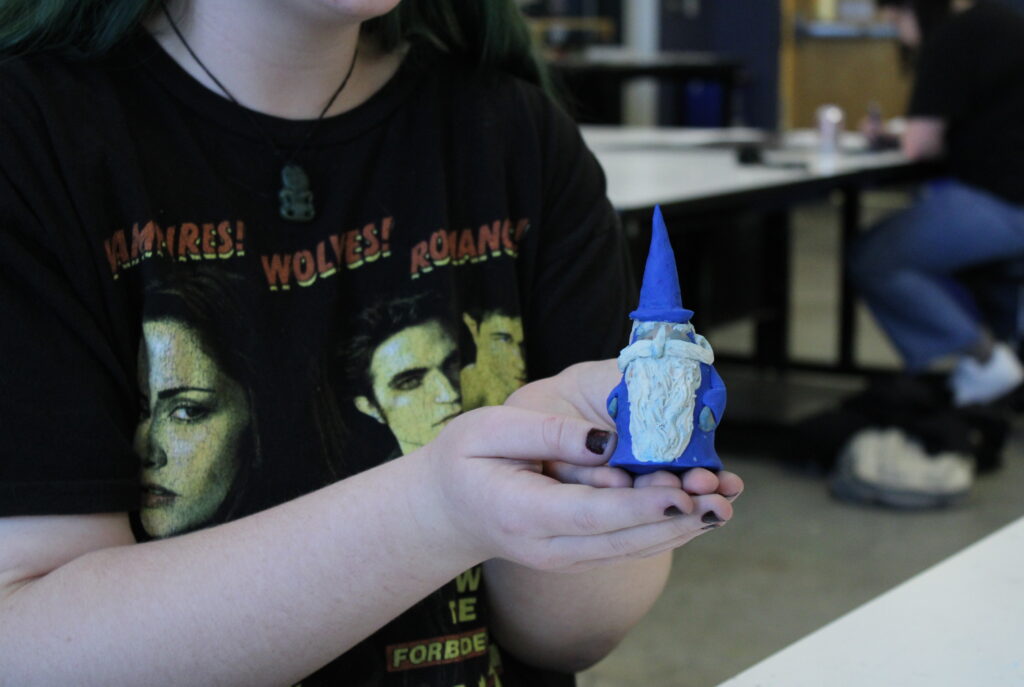
On Friday, October 16, the student organization ArtX hosted a “Sculpted by You” event in the Multimedia Center. Held during the club’s regular weekly meeting, the ArtX Event Coordinator, Kiah Cottrell, described the event as a “focus on the medium of sculpture” and “an open, freeform creative session designed to let people explore different materials at their own pace.”
With materials provided by ArtX, around 10 students worked on individual projects sculpting animals, plants, humanoid figures, and, in one case, a deity-like original character with tentacle appendages assembled from aluminum foil and black clay.
This is just one of several meetings and events held each week by the nearly five dozen student organizations at WSUV. These organizations represent a range of interests, including personal hobbies, media franchises, academic and professional disciplines, political advocacy, religions, sports, and cultural engagement.
Patrick Wilson, vice president of the History Club, has been on campus since 2022, and recalls that campus activity was limited at the time due to the COVID-19 pandemic.
“You could definitely tell,” he said, reflecting on the post-quarantine campus environment. “I started going here right as all the restrictions were lifted, but I felt like things were pretty stilted.”
While opportunities for student involvement existed, they remained limited through the 2022–2023 academic year. Since then, Wilson has observed “a huge increase in members and attendance for our events,” a trend he believes reflects broader improvements in campus life compared to when he first arrived four years ago.
Ethan Pace, a junior majoring in accounting, shares a similar perspective. He is president of the Pokémon Club, an officer in the Anime Club and WSU Gamers, and a member of the Game Development Club and Beta Alpha Psi honor society.
“There’s been more people showing up to the club meetings and more people participating in the discussions in the club Discords,” he says, describing an increase in engagement compared with the 2024–2025 academic year.
Campus clubs offer more than just on-campus recreation; several participate in regional and national competitions. The Aerospace Club, established in 2016, has competed multiple times in the International Rocket Engineering Competition (IREC), held annually in June in Texas. In 2022, the WSUV team placed sixth out of approximately 130 participating schools.
The club intends to compete again in 2027 and has begun designing and constructing a rocket capable of reaching an altitude of 10,000 feet (roughly three kilometers) while carrying a CubeSat-style payload.
Closer to home, the Association for Computing Machinery’s Council on Women in Computing (ACM-W) is preparing for the International Collegiate Programming Contest (ICPC) taking place in Oregon in November. Students involved with ACM-W are training to compete in teams against other university programmers.
Officers from both the Aerospace Club and ACM-W emphasize that the benefits of these competitions extend well beyond the classroom. Participation and strong placements in competitions can strengthen students’ résumés as they prepare to enter the workforce.
Events like IREC also serve as networking opportunities, allowing students to connect with peers from across the country and professionals already working in their respective engineering fields.
From the weekly cultural activities held on campus to participation in international competitions, student-led organizations offer students a range of activities to participate in beyond the classroom at WSUV. The efforts of the officers and members of the clubs have rebuilt a campus social scene that was stymied by the COVID-19 pandemic.
However, while some clubs note a trend of improvement in campus participation, others note disparities in support and resource allocation. There have also been struggles as academic departments are reorganized and certain programs have been de-emphasized by the university.
The second half of this series will discuss the remaining challenges that club leadership has identified despite recent improvements and what steps could be taken to rectify those issues.
You may also like
-
Threat or Tool? Professors Weigh-in on AI in the Classroom
-
The WSU Foundation is Holding a Student Art Contest, and Winners Get 500 Dollars Each
-
Annual Professional Clothing Closet Helps Students Dress for Success
-
Your Voice, Your Vote: How WSUV Students Are Approaching the Midterm Elections
-
Exhibit Artists McKinney and Lam Reflect on Family and Their Art