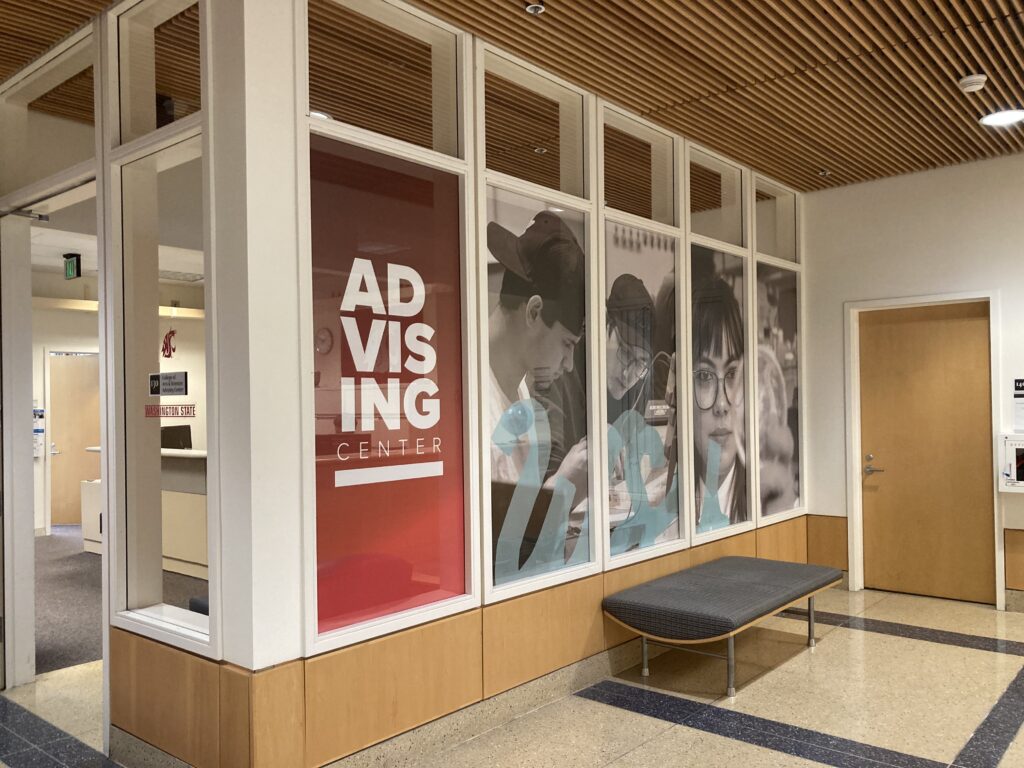
WSUV’s shift towards a centralized advising center aims to unify the academic advising process for students by bringing advisors from multiple academic colleges together under one roof.
According to Katrina Choi, the lead academic coordinator with the College of Arts and Sciences, the primary benefit of the new advising center is the physical proximity of various academic departments.
Located in the Science and Engineering Building (VSCI), the new advising center does not alter the level of support advisors are providing; it instead eliminates the geographical barriers that previously separated distinct academic colleges.
This change is particularly helpful for students who are shifting their majors or pursuing a double major. Under the previous advising model, academic advisors were housed in their respective colleges, creating physical separation among advisors across campus.
“Now with this advising center, the College of Arts and Sciences, the College of Business, the College of Engineering, and the folks that are handling first year advising are all in one space, so students don’t have to find new locations,” Choi said. She also noted that when a student is interested in changing their academic path, the transition is smoother because the appropriate advisor “is probably just down the hallway now.”
Although major hubs have combined inside of VSCI, smaller academic colleges on campus like education, nursing, and the Murrow College of Communications remain in their original locations.
The advising center completed its primary consolidation over the summer, making this academic term its first official test cycle. While direct student testimonials are still accumulating, feedback from student staff indicates that they are already noticing changes due to the structural differences. Choi shared that peer mentors working with first-year students “have said that it is helpful to have one space that everybody is in.”
Choi explained that the new VSCI set-up functions as a primary hub for advisors. Furthermore, the arrangement has strengthened internal staff communication and is allowing for more collaboration among advisors due to their co-location.
“The other day I was meeting with a student that had questions about an art class and wanted to know what the expectations were for that class” Choi said, “I was able to just pop over and talk to Erin [Leverman] since she advises for art and she had a little bit more insight in terms of that.”
While the advising center location may have changed, the day-to-day workflow and support students receive during peak advising season remains similar to past semesters. Choi emphasized that she does not necessarily view the new model as more or less streamlined than its predecessor, expressing complete confidence in the services provided to students before and after the advising center’s move.
“We’re still committed to serving our students and helping them to the best of our abilities,” Choi shared, “and if they ever have any feedback, they are always welcome to stop by and chat with me.”
You may also like
-
Student-Led Organizations: Building Community on Campus
-
Threat or Tool? Professors Weigh-in on AI in the Classroom
-
The WSU Foundation is Holding a Student Art Contest, and Winners Get 500 Dollars Each
-
Annual Professional Clothing Closet Helps Students Dress for Success
-
Your Voice, Your Vote: How WSUV Students Are Approaching the Midterm Elections