For someone seeking housing assistance, arriving at the wrong office can mean more than a minor inconvenience. It can mean walking across Vancouver with every belonging they own, only to learn that the person they need is somewhere else.
Sesany Fennie-Jones, chief executive officer of Housing Solutions Center, recalled encountering that problem when the organization’s administrative offices and programs operated in separate locations. Bringing staff and services together under one roof helped reduce that confusion, but the organization’s name didn’t properly communicate their work and approach to addressing homelessness.
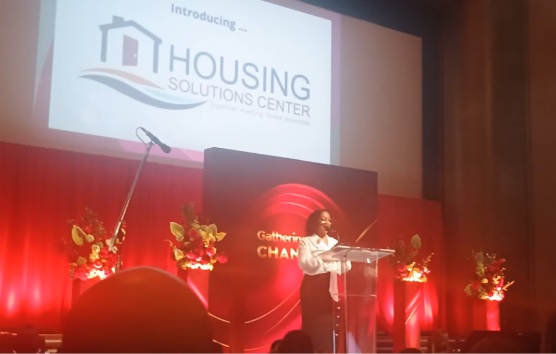
Now, the Clark County nonprofit, formerly known as Council for the Homeless, has re-identified themselves as Housing Solutions Center. The new name “speaks directly to what we need to solve homelessness,” Fennie-Jones said.
The change reflects an organization that serves people experiencing homelessness and those trying to avoid it. Its work includes connecting residents with resources, coordinating access to housing programs, and helping people navigate situations that threaten their housing stability.
Fennie-Jones said the former name did not fully represent that scope. Someone seeking assistance may still have a home but be facing an eviction notice or an unexpected expense that makes paying rent impossible.
The new name also responds to concerns about how people seeking services feel when approaching the organization. According to Fennie-Jones, providers with lived experience of homelessness contributed to the rebranding process, and the organization had heard that its former name could feel harsh or unwelcoming.
“We don’t talk about people as what they’ve experienced and putting them into a category,” she said, explaining how the change moves away from defining people by their circumstances.
Another goal is to clarify the organization’s identity. Housing Solutions Center is a nonprofit, not a city or county government agency. Fennie-Jones said the former name’s reference to “council” sometimes created confusion about whether someone meant the organization, Vancouver City Council, or Clark County Council.
The nonprofit collaborates with government agencies and community partners, but it has its own role within the local housing response.
That distinction matters when residents seek help. Fennie-Jones said Housing Solutions Center coordinates access to county-connected programs, including permanent supportive housing, transitional housing and rapid rehousing. Other housing and shelter programs have separate referral processes.
Contacting the organization also does not guarantee an immediately available shelter bed or home.
With limited shelter capacity and affordable housing, staff often work to identify resources that fit individual circumstances. That might involve exploring domestic violence services, youth resources, or safe parking options for someone living in a vehicle.
“We’re constantly trying to piece together resources,” Fennie-Jones said.
For people who still have housing, an unexpected disruption can create a crisis. A car repair, illness or death in the family can force someone to use money otherwise intended for rent.
Fennie-Jones described diversion assistance as one possible response for people who need limited, short-term support to regain stability. Someone may ordinarily earn enough to cover their bills but need help overcoming a specific setback. Funding for prevention, however, remains limited, she said.
For residents who need ongoing support, Fennie-Jones pointed to permanent supportive housing, which combines affordable housing with services intended to help people remain housed.
The broader challenge, she said, is the shortage of housing that residents can afford.
Fennie-Jones described a gap between housing costs and the earnings of people working in essential community jobs such as retail, food service, and childcare. Addressing that gap, she argued, requires greater attention to housing supply, affordability, and the rules governing what can be built.
She called for a wider range of housing options, including apartments, duplexes and fourplexes, along with creative approaches that can help while new construction takes time.
Shared housing is one possibility she would like the community to explore. Structured opportunities to share a home could help people find an affordable place to live while making use of existing space.
Residents who want to help can start by learning about local housing needs and following the organization’s website and social media, she said. She also encouraged people to understand housing-related ballot measures and speak with elected officials about policies and funding.
Those conversations, she said, should focus on what neighbors need to obtain and maintain a safe place to live.
“I really believe that homelessness is solvable here,” Fennie-Jones said. “But we have to be all in.”
Residents seeking housing assistance can call the Housing Hotline at 360-695-9677. More information about services and opportunities to support the organization is available at hsc-swwa.org.
You may also like
-
WSU Looking to Adapt the University’s General Education Curriculum, Hosts Staff Listening Session to Gather Feedback
-
Day in the life of WSUV Campus Police
-
WSUV Sees Rise in Undergraduate Retention Rates, Mirroring the Rest of WSU
-
Ribbon Cutting Introduces the Windstead Lending Library, Named after Former ASWSUV President Jacob Windstead
-
The Spooky Coug Carnival Ratchets Up the Fright with Facepainting, a Pie-Eating Contest, and “Axe” Throwing