Will Luers, a digital artist and professor in the Creative Media & Digital Culture program at WSUV, hosted a workshop on October 9 on short form video production, structure, and some genres of short-form videos.
Luers opened by discussing how the length and structure of short-form videos have changed over time. He noted that platforms like Instagram and YouTube Shorts have expanded their limits from one minute to three minutes, which reflects the growing demand for this kind of content.
He also highlighted Vine – a platform that was shut down in 2017, which was famous for its 6-second looping videos – as a leader in short-form narratives.
One of the major focuses of the workshop was the story-telling structure of short-form videos. Luers used recipe videos as an example, explaining how they often begin with the finished dish to hook viewers, then use montage editing to show the cooking process. They also leave exact details like temperature and cooking time in the description to keep the video visually appealing and concise.
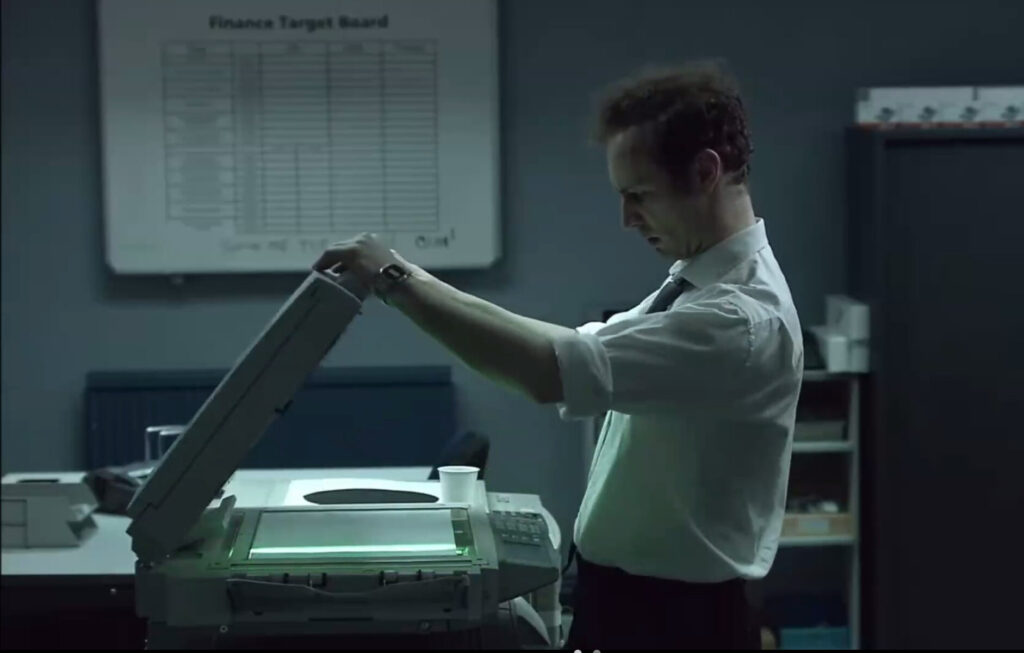
To further illustrate the power of this structure, Luers played a roughly 2 and a half minute long short film called “The Black Hole.”
The short followed a bored office worker who somehow printed a black hole onto a piece of paper, and it could be used to reach through solid objects. There was escalation when the employee realized he could use the black hole to access a restricted room and reach the safe inside. The payoff came when the employee inadvertently became stuck inside the safe after crawling through the black hole.
Luers also played a video by South Park creators Trey Parker and Matt Stone. They explained that beats should connect through “but” or “therefore,” creating complications and consequences that move the story forward, rather than a sequence of events proceeding arbitrarily.
Luers briefly discussed AI-generated videos, acknowledging concerns about the quality of productions while arguing that lower production costs could allow creators to experiment with ideas that might otherwise be too expensive to produce. “You put a lot of work into your idea, and then you have to get money for it,” he said.
Luers explained how short-form videos can tell stories without relying on traditional narrative structures. Using examples of cooking videos, travel montages, craft demonstrations, and visual essays, he discussed how editing, sound, rhythm, and composition can sustain viewers’ interest.
He noted that sound can be very important, particularly in cooking videos, where the sounds of chopping ingredients and preparing food can enhance the viewing experience by giving it that ‘ASMR’ quality.
The workshop also examined emerging genres, particularly vertical micro-dramas, which use short, serialized episodes to keep audiences invested in an ongoing story. Luers explained that this creates a new challenge, and he proposed the question, “How do you capture attention on these little short forms and still hold attention for the long forms?”
His answer was, “Enter late, leave early. That is, you’re in the middle of the conflict, whatever it is, and then you anticipate what’s gonna happen, and then you cut it off. That makes you wait for the next episode.” A successful short-form video, Luers argued, continually raises questions, gradually reveals information, and ultimately delivers a satisfying payoff.
You may also like
-
ScreamJam Spirals Into Halloween, as Student Artists and Programmers Team-Up in Month Long “Game Jam” Competition
-
Food for Thought: WSUV Students Reflect on Campus Food Options
-
War in Iran: WSUV Students Reflect on the Conflict
-
WSUV Art Exhibition Explores the Connections of Inheritance and Memory
-
From Registration to Representation: Helping Students Make Their Voices Heard