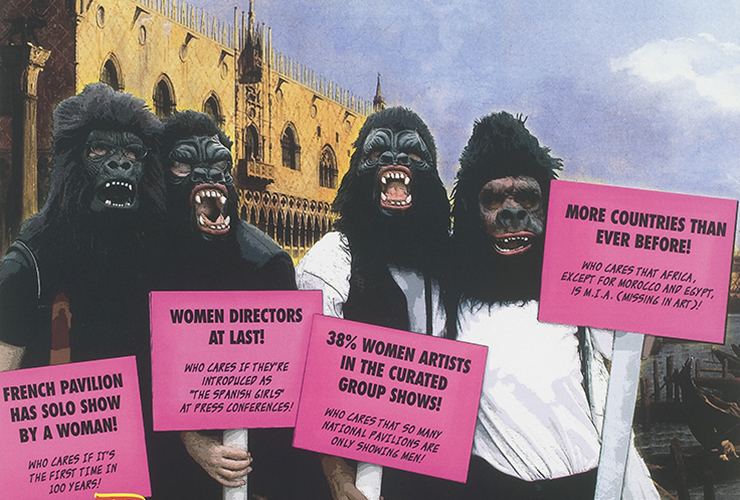
From the Guerrilla Girls to Howardena Pindell, during the last Coffee and Conversations event for the semester, hosted by the Human Development Club, Dr. Nanette Thrush gave a presentation on the history of protest art.
Thrush started with recognizing the political climate around diversity, equity and inclusion (DEI), due to the Trump administration’s early actions against particular language used with DEI programs in the educational environment.
She said she wanted to “acknowledge that because I am in this classroom with you in an academic context for an academic club, I’m allowed to talk about this stuff.”
For the presentation, Thrush started with the Guerrilla Girls, a collective of artist-activists from the 1980s known for wearing gorilla masks to separate their personal art from their movement. She explained that the group became widely recognized for making and sharing observations and statistics about inequalities in the art world.
Highlighting the range of protest methods available, Thrush noted, “It can be scary, but there are all kinds of different ways in which you can protest.”
Demonstrating two staunchly different styles of protest art, Thrush first showed a piece done by Howardena Pindell called Separate But Equal: Apartheid (1987), which she notes is a subtler form of protest art.
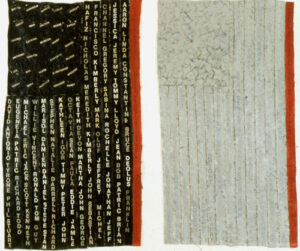
“So Howardena Pindell wants to talk about apartheid, but she doesn’t do it really loudly right?” Thrush said. “A work like this is really subtle. And in fact, when you see something like this, you have to move in really close to even be able to see that there are words on here . . . The words are things like malnutrition, death, torture . . . she is very subtly and in a very personal way making clear her feelings about apartheid.”
In contrast, Thrush shared the poem I Want a President (1992) by Zoe Leonard, which represents a far more direct and confrontational form of protest, using more angry and explicit language, and even displayed at The High Line in Manhattan–a highly visible art space.
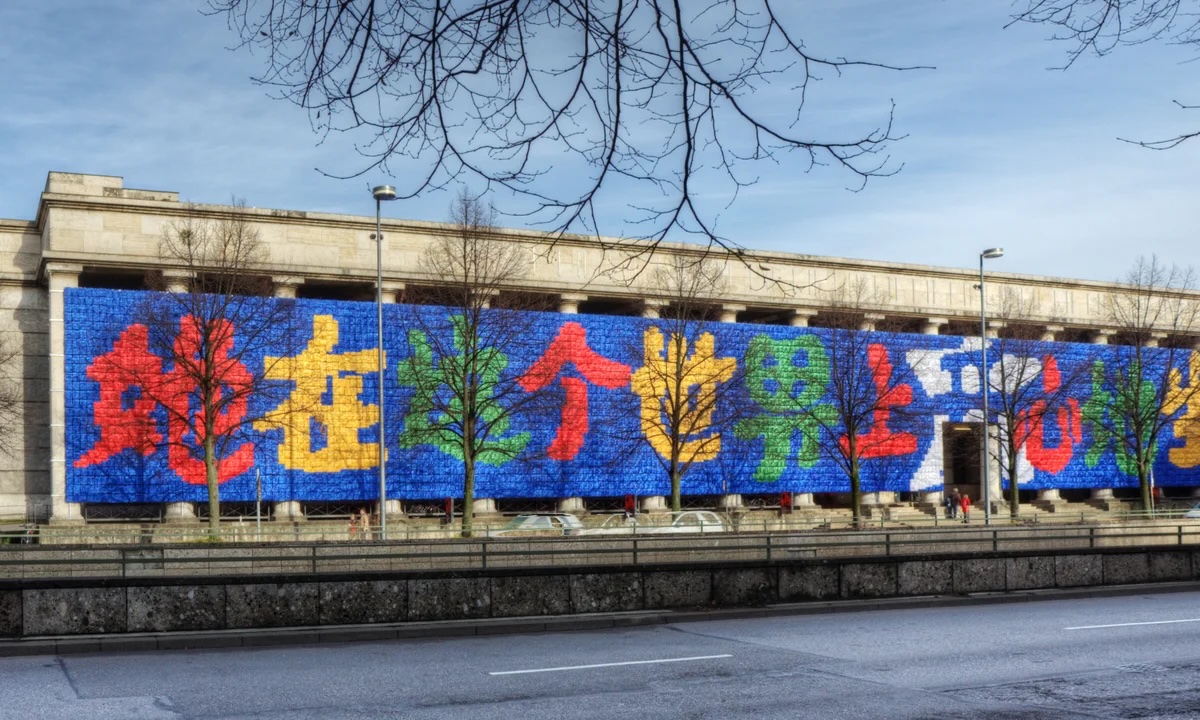
Thrush went on to highlight several other artists who engage with protest in distinct ways. Contemporary artist Ai Weiwei, who used a large scale installation to call attention to government failures and human rights issues in his piece Remembering (2009).
While photographer Nan Goldin has taken a more activist approach, organizing “die-in” demonstrations in museums to protest the influence of the Sackler family in the opioid crisis.
Thrush returned to the idea that protest can take many forms, and invited attendees to reflect on the issues they are most passionate about, as well as the protest strategies they find most effective and meaningful.
The attendees provided a variety of activism methods, including crafting, music, staying informed and informing others, sharing resources (time, money etc), fundraising, and maintaining hope and resilience as a form of resistance.
You may also like
-
SW Wash. Locations Accepting Unused Medications for National Drug Take Back Day
-
VSCI Unveils Consolidated Advising Space for WSUV Students
-
Student-Led Organizations: Building Community on Campus
-
Threat or Tool? Professors Weigh-in on AI in the Classroom
-
The WSU Foundation is Holding a Student Art Contest, and Winners Get 500 Dollars Each