By Ashlynn Fredendall and Rebecca Younger
As WSUV’s Campus Garden enters its third year, the space continues to grow not only in vegetable and flower production, but also in the community it creates. While faculty coordinators continue expanding the garden, students say it has become much more than just a place to grow food.
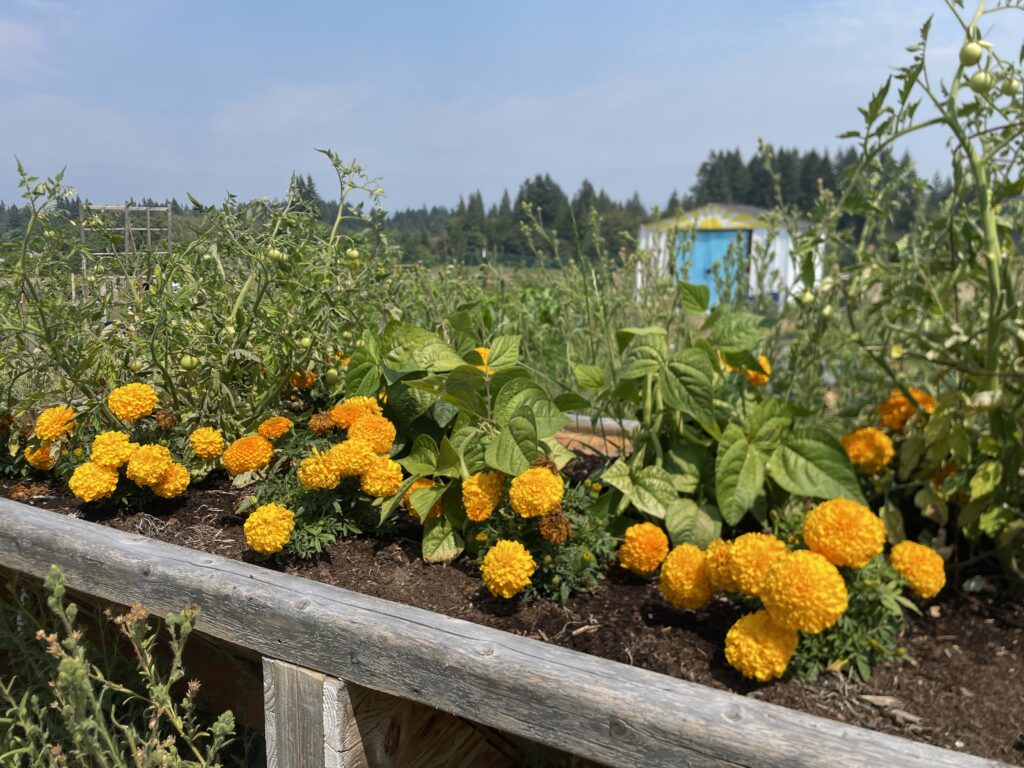
Located North of the Clark College Building next to the Green 3 parking lot, the garden is hard to miss with its flourishing garden plots and colorful shed displaying a student-painted mural.
According to Assistant Professor of History and co-director of the garden, Dr. Iván González-Soto, the garden serves several purposes. Alongside producing organically grown food and flowers, this space provides students with an opportunity to build community and develop skills.
“If you’ve never had any experience gardening, maybe it’s new to you, maybe you’re curious about it. This is the place to kind of experiment, get some hands-on skills, go to workshops… learn from others, or even share some skills you have.”
WSUV alumna, Tabitha Berridge, first gained interest in gardening through WSUV’s Native American Programs and Julian Ankeny’s teachings of native plants. She also grants a big role to the Garden Club, saying that “it was a lot of fun learning about plants and getting to taste what we grew.”
Although the garden plot she originally cared for has become a shared space, Berridge sees that collaboration as one of the garden’s greatest strengths. ”It used to be my plot, but now several people have been working on it, so it feels more like a shared project than something that’s strictly my own,” she said.
Even after graduating, Berridge has remained involved with the campus garden and hopes to have a garden of her own someday. “I think it’s meaningful because the work you put into the garden today benefits future generations of students.” She also believes gardening helps garner a better appreciation for the food we eat, saying that “I think a lot of people are disconnected from where their food comes from.”
The garden operates through two sections — the Indigenous Learning Garden and the student community garden. Within the student community garden, there are 19 plots that students and clubs can adopt. The participants are responsible for maintaining their plots while also checking in with the faculty coordinators.
WSUV student, Willow Buckingham maintains one of these student garden plots and believes gardening is about understanding nature. Although they share the plot with friends, they serve as its primary caretaker, growing tomatoes, broccoli, peas, strawberries, fava beans, and other vegetables.
Their interest in gardening grew from a fascination with ecosystems and sustainable living. ”Modern gardening works by fighting against nature,” they said. “You’re weeding, you’re fighting pests, and you’re watering every day. I find it fascinating that we can learn from nature and use those lessons to make our gardens grow themselves.”
For Buckingham, the campus garden has become a place where those ideas come to life. They appreciate the structure the garden provides, saying that organized workdays and the support of other gardeners make it easier to stay involved than if they were gardening alone.
Like many first-time gardeners, Buckingham has experienced both successes and setbacks. They have harvested peas directly from the vine and recently grew their first broccoli, though it spoiled before they had the chance to eat it.
Despite that disappointment, they plan to remain involved with the garden throughout their time at WSUV and hope to continue gardening through another community garden or with friends after graduating.
Since the garden first began in 2024, Dr. González-Soto says that one of the greatest achievements of the garden has been its transformation from a grass field into a growing and dynamic gardening space that produces a wide variety of plants.
Berridge contributed a tomato plant, oregano, and peppers after receiving recommendations from a local nursery, which donated the plants to the university. She has since harvested oregano and Swiss chard, using the fresh produce in a salad.
For Berridge, the campus garden offers much more than fresh vegetables. ”I think one of the things that makes the garden really special is that everything is grown without pesticides and is organically grown,” she said. ”It’s also available to all students — you don’t necessarily have to work in the garden to enjoy it.” She also believes gardening supports physical and mental well-being. “It gets you outside, helps you connect with other people, and builds a sense of community.”
Despite the growing community, an obstacle that continues to be a challenge for the garden is maintaining that involvement. Once students graduate, plots become empty and open for adoption, so the garden must continue its efforts to generate interest and engagement in order to recruit new inheritors.
One way that the garden coordinators address this challenge is through garden workdays, which incorporate accountability and structure for students and the garden. “It reminds me when it’s time to take care of my plot. If I had a garden by myself, I don’t think I’d always know when to plant things or when to do certain work,” says Buckingham.
The garden coordinators also plan to build signage for the community garden that would display a variety of different languages, apply for grant funding, speak with potential donors, provide grown food to the Cougar Pantry, hire student garden coordinators, build a living fence, and establish a community bulletin board that will have flyers and seed packets for students.
Through shared work, learning, and community, the garden is cultivating a lasting impact on the WSUV campus — one that will continue for years to come.
You may also like
-
VSCI Unveils Consolidated Advising Space for WSUV Students
-
Student-Led Organizations: Building Community on Campus
-
Threat or Tool? Professors Weigh-in on AI in the Classroom
-
The WSU Foundation is Holding a Student Art Contest, and Winners Get 500 Dollars Each
-
Annual Professional Clothing Closet Helps Students Dress for Success