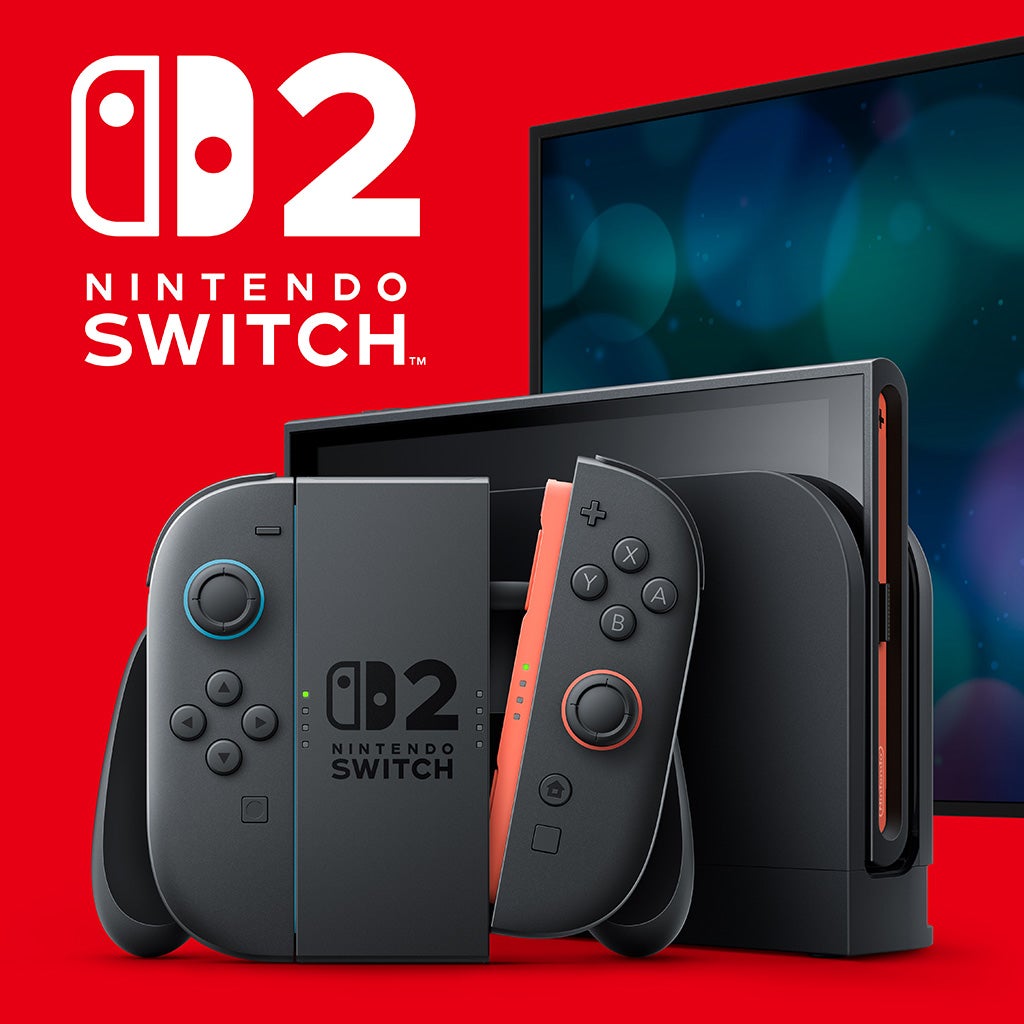
The long awaited Nintendo Switch 2 finally released this year, although even before release, warning signs were already evident. The Switch 2 seemed nearly identical to the first Nintendo Switch, and there is a significant price increase from the original’s launch price.
That being said, after owning the first Switch since 2017, the overheating problem with that console caused the battery to swell, prompting me to buy the Switch 2 or risk turning my Switch 1 into an impromptu BBQ.
While I have been using the console over the last few months, I was left pondering my own disappointment. While being capable of playing the best games is certainly a key factor, when making such a large purchase, one needs to also consider the price, hardware capability, user interface (UI) and if there are any notable features.
On all of these fronts, the Switch 2 has failed to meet my expectations.
Price
The Switch 2 is currently priced at $450, which is $100 less than the standard Playstation 5, but $150 more than the Switch 1 launch price.
Many Switch 2 games start at $70, whether it be Mario Tennis Fever or Pokémon Legends Z-A, which already has $20 DLC on the way. Meanwhile, some larger games, such as Mario Kart World, or the Switch 2 version of The Legend of Zelda: Tears of the Kingdom (formerly a $70 Switch 1 release), are priced at $80.
The accessories are also bound by similarly high prices. Joy-Con controllers are $100, the Pro Controller is $90, a new dock is $125, and a carrying case is $85. The list goes on. If you want to buy anything besides the console itself, your wallet is doomed to cry, as everything from plastic wheels to Amiibos has become a massive purchase.
Hardware
The Switch 2 and Nintendo consoles aren’t lauded for their hardware capabilities; where the Switch 2 succeeds is in improving on the Switch 1 in small ways, such as the improved stand, the fan in the dock, and an additional charging port on the top of the console, as well as the hardware itself.
Still, the storage space on the console is relatively small for a modern console at 256 GB, and the console requires you to use a more expensive Micro SD “Express” card to get another 256 GB for $60.
UI
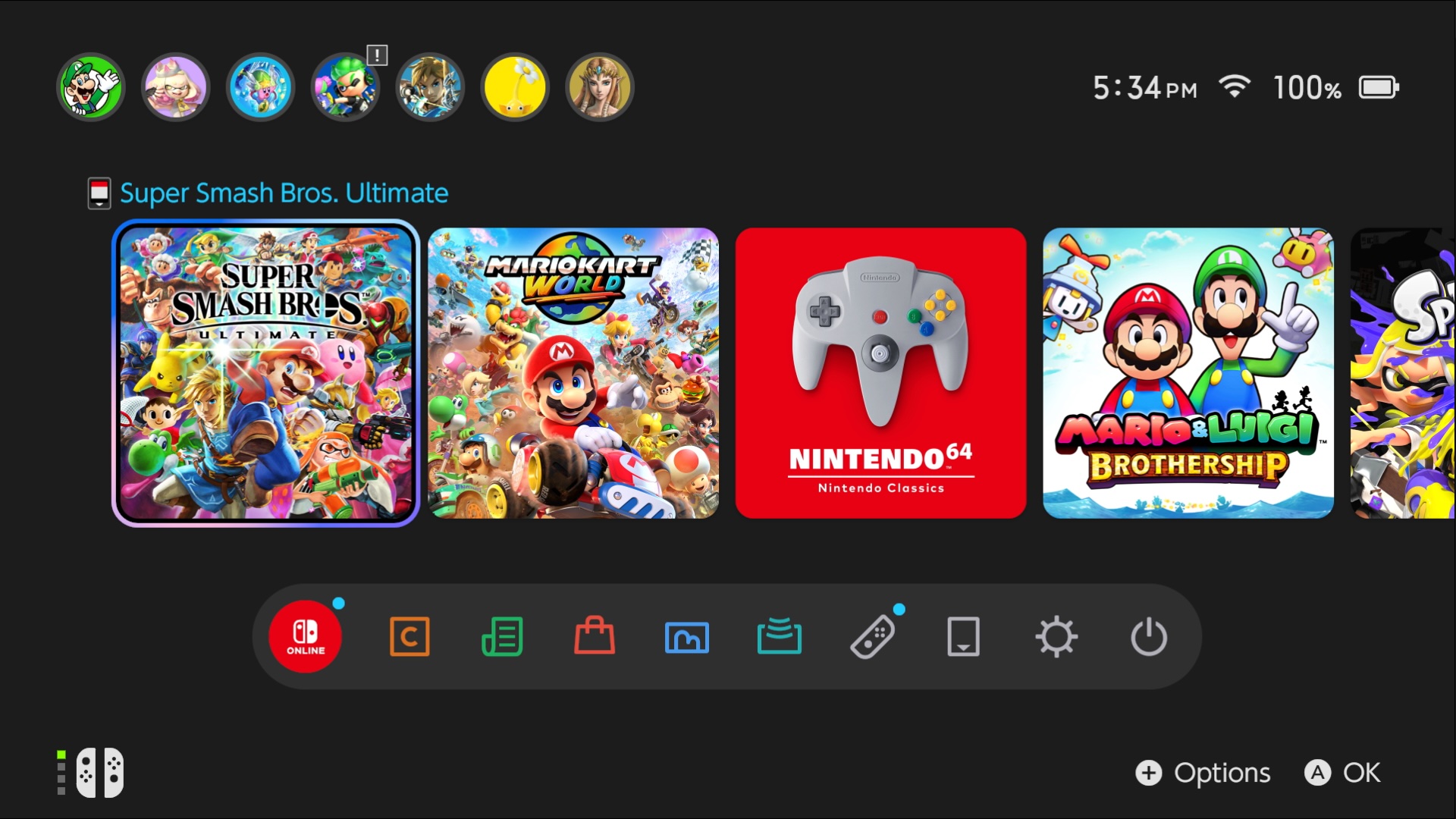
The UI was the most disappointing part of the Switch 2 to me. Nintendo has a history of creating unique home menus and adding flavorful features, which make their consoles as beloved as their games. The Switch 1 was a massive step back in this regard. No themes, and getting to the folders or “groups” requires you to scroll to the far right of everything; the entire thing is just a simple list.
The Switch 2’s UI in this regard is nearly identical. You are still forced to scroll through a massive, unorganized list of games to find what you want to play, and you cannot customize the look, something even the more “function first” consoles, such as the Playstation 5, give a plethora of options for.
This problem is present throughout the Switch 2. The E-Shop is a barely organized mess; every setting and album is devoid of any flavor and personality. Finding anything is a test of trying every vaguely labeled button till you get lucky.
For a company known for its family focus and a young audience, the choice to have a sterile UI system is baffling.
Features
The features on the Switch 2 are a massive selling point, and while, like its predecessor, the ability to take the console everywhere is a boon, the new features of the Switch 2 range from pointless to detrimental.
On the hardware side, you have the new gimmicks. The camera in the Joy-Cons is laughably useless; the $10 demo, “Nintendo Switch 2 Welcome Tour,” can only think of using it to play rock, paper, scissors. Amazing.
The mouse functionality is exciting, but since there are so few games that utilize it, and the UI isn’t designed for a mouse, it’s at best forgettable.
On the software side, you have the virtual game card system. What Nintendo advertised as a way to streamline digital game ownership has become a massive headache for me.
Beforehand, consoles in the same Nintendo “family” could play each other’s games. This allows two consoles to play simultaneously, without requiring the family to purchase the same game multiple times. Now, you either need to load the game on a new console by pairing it through Bluetooth with a two-console limit, or you can lend the game to a family member for 14 days.
The new game cards also must be updated to the latest version if you want to transfer a game to a different console; this is a nightmare for game preservation, because if you ever want to play an older version of a game (this is common for speedrunners, who need specific glitches), you are forced never to update the game, because game updates are permanent.
The other “stand-out” feature is GameChat, which requires a phone number. So, if you have a phone number but cannot call a friend, or use another gaming voice chat service like Discord (of which there is not native support for on Switch 2), congratulations!
And yes, unlike every other console, you can only GameChat with Switch friends who have set up GameChat, so you can’t talk to people online until they accept your friend request, and they also have to set up this near-useless feature.
In Conclusion
All in all, I am surprised to feel disappointment with a console that had such a low bar to clear. The Switch 2 works, it plays games, and it improves very slightly on the Switch 1. Still, I feel like I wasted my money despite being forced to purchase it.
The Switch 2 is a console which does not distinguish itself from its predecessor in any form except the higher price tag.
You may also like
-
Rising Costs and No Sense of Community on Campus. Students Offer Feedback to WSU President Elizabeth Cantwell at Recent Listening Session
-
New Coug Orientation Goes Through a Revolution, As a Result of WSU’s Systemwide Reforms
-
The Silent Voices: A Chance to Tell Their Side
-
“Terrible” and “Complicated.” Students React to Trump’s State of the Union Address
-
Impressions of a WSUV Douglas Fir