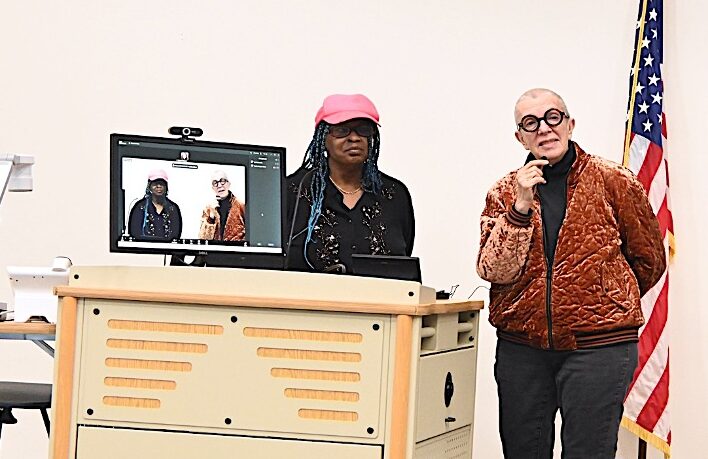
“Year after year, we watch American citizens become silent… and people like me have to speak for those voices that were silent. Their lives shortened through police violence,” Silent Voices (Donna Haynes)
In a recent interview, Donna Haynes elaborated further, “People need to know the truth that the person the police killed was a living, thriving person. They were alive. They had dreams, had hopes, aspirations, and it was taken away from them.”
In part for the CSEJ (Collective for Social and Environmental Justice), WSUV’s DocArts Series held a screening of Open Signal’s Silent Voices, free and open to the public, followed by a talk with the film’s writer and creator, Donna Haynes, accompanied by Kathryn Kendall, Director of Performance and photographer. The screening was presented as awareness, awareness of police violence, awareness of victims, and awareness of how quickly a person’s life can be reduced into a police and media narrative.
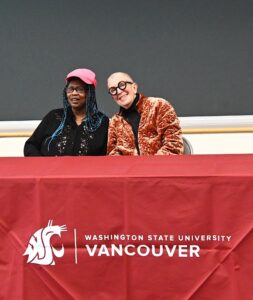
Haynes makes the intention clear from the beginning of the film: she is speaking because others cannot. She names it as a pattern “year after year,” and she places Portland inside that pattern, not outside of it. Silent Voices moves from one story and voice to the next, in a specific order, with each story holding its own life, tone and truth.
The film unfolds through first-person monologues that give voice to individuals killed in encounters with Portland-area police, spanning nearly two decades. Moving from Kendra James in 2003 through Aron Campbell, Jack Collins, Brad Lee Morgan, Merle Hatch, Bodhi Phelps, Christopher Kalonji, and John Elifritz, each story restores personality, humor, and family memories often absent from official reports and media attention. The film closes with Quanice “Moose” Haynes, Donna’s seventeen-year-old grandson, grounding the entire project and transforming personal grief into a public act of testimony.
After the screening, the room shifted from watching to listening. The conversation with Donna Haynes and Kathryn Kendall moved behind the scenes of the film into how it began, what it required, and what it continues to cost.
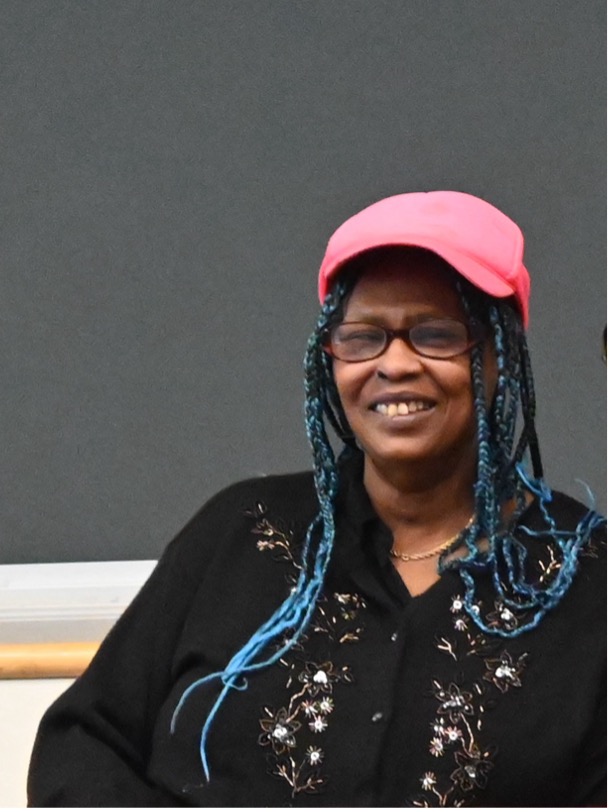
Haynes shared that Silent Voices did not begin as a script. It began as private writing during grief. English was never her strongest subject, she explained, because she struggled with grammar, but she powered through with empathy.
“I have a great imagination. I have had that since I was a little kid,” Haynes said. “I can imagine anything, to me it helped out because I was able to take my imagination and put it in that person’s place, I could stand and understand.”
With Haynes commencing her writing, a close friend would read her drafts, but when she came across the portion of vulnerable writing, that friend stopped and said, “That’s a play.” Coincidentally, when Haynes told a local friend and photographer about the situation and showed her writing, Kendall added that when she read it, she said, “It is a play, and you know I am in theater, a professor in theater, right?” From that moment on, more writing would continue with different versions from Donna’s perspective to later “Moose’s” voice. Kendall added, “Because she wanted to hear him speak.” Donna added “I needed it, I needed to hear him.” It was no longer just writing of grief to treasure the last moments; it became testimony.
When asked what responsibility comes with speaking for people who are no longer here, Haynes answered directly, “The responsibility is to tell the truth”. She described the amount of research involved, the hours spent reading, verifying, and speaking with families. She had sent drafts to parents and loved ones. They responded with corrections, additions, or removals, “yay, nay, remove, add,” she explained. The stories are not hers to take; they are entrusted to her.
Kendall emphasized that empathy alone is not enough. The film is shaped by conversations, by listening to mothers, wives, siblings, so that each portrayal reflects not just a tragic moment, but a whole human life. That is why humor exists in the film. Haynes said she intentionally wove lighter elements into heavy stories because she did not want the audience to see only trauma. She wanted people to know something more about each person; something funny, something ordinary, something alive.
When interviewed, Laurenda Bateman, a fellow WSUV student who was in attendance, commended Haynes’ ability to get past what she typically sees in “one-sided” news reports that favor the police or government, and instead focus on the person lost in a moment of police violence.
“Watching the film and getting a chance to hear stories from the victims’ mouths felt so real, it took me a minute to realize that they had died,” Bateman said. “The fact that she [Donna] had written in the humor to get a full sense of their humanity, I really felt that in the film. The vulnerability that it took for her [Donna] to sit through that grief and bring her grandson to life in a way that gave feeling.”
When asked to further elaborate, she said, “This documentary was a way to truly connect with victims’ humanity and to really look at their stories and change the perspective, and when you find yourself engaging in the online noise and clatter, that’s not helpful, and it’s not coming from a place of empathy.”
Haynes spoke about how collective grief and working with other families changed her perspective. “It wasn’t all about me,” she said. “Somebody else is hurting too.” The project became not only a way to remember Moose, but a way to stand alongside others navigating similar losses.
When asked what students who feel uncertain about police accountability can do, Haynes responded by saying “Read. Read critically. Notice patterns. Question narratives that don’t sound right.” Awareness begins with attention, and attention begins with questioning what we are told.
The interview did not resolve the weight of the stories, and it did not attempt to offer easy conclusions. Instead, it made something else clear: Silent Voices is not only about what happened, but it is about who was here, who was loved, and who should never be reduced to a report. It is about recognizing patterns in how police violence is justified, repeated, and normalized. And ultimately, it is about creating space for change, for justice, and for continued advocacy.
The screening was hosted through the DocArts Initiative, by Desiree Hellegers, Department of English Director and Collective for Social and Environmental Justice Director, Julian Ankney (Nimiipuu, Nez Perce), Director of Native American Programs and Co-Director of the Visiting Writers Series. The full film can be viewed here.
You may also like
-
Rising Costs and No Sense of Community on Campus. Students Offer Feedback to WSU President Elizabeth Cantwell at Recent Listening Session
-
New Coug Orientation Goes Through a Revolution, As a Result of WSU’s Systemwide Reforms
-
“Terrible” and “Complicated.” Students React to Trump’s State of the Union Address
-
Impressions of a WSUV Douglas Fir
-
WSUV Advising is Making Changes, and is Now on Canvas