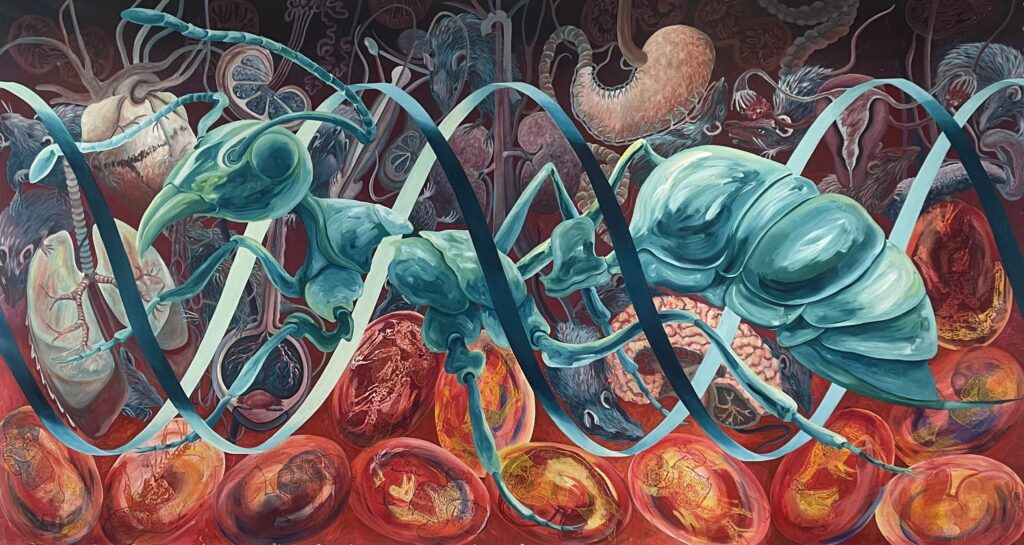
Picture this scene: while entering the study area on the lower level of the Life Sciences Building (VLSB) for the first time, the last thing you’d expect to be greeted by is a ten-foot ant, crawling its way through a large canvas stapled to the wall. This painting, titled The Inheritors, is a large-scale art piece donated by Jo Hockenhull in 2024, alongside the opening of VLSB.
Moving closer, you start to notice the intricacies of the artwork. The ant is painted in ethereal cyans and greens and is segmented into three pieces, all seeming to hover together. This may hint at the way that ants help to break down organic matter.
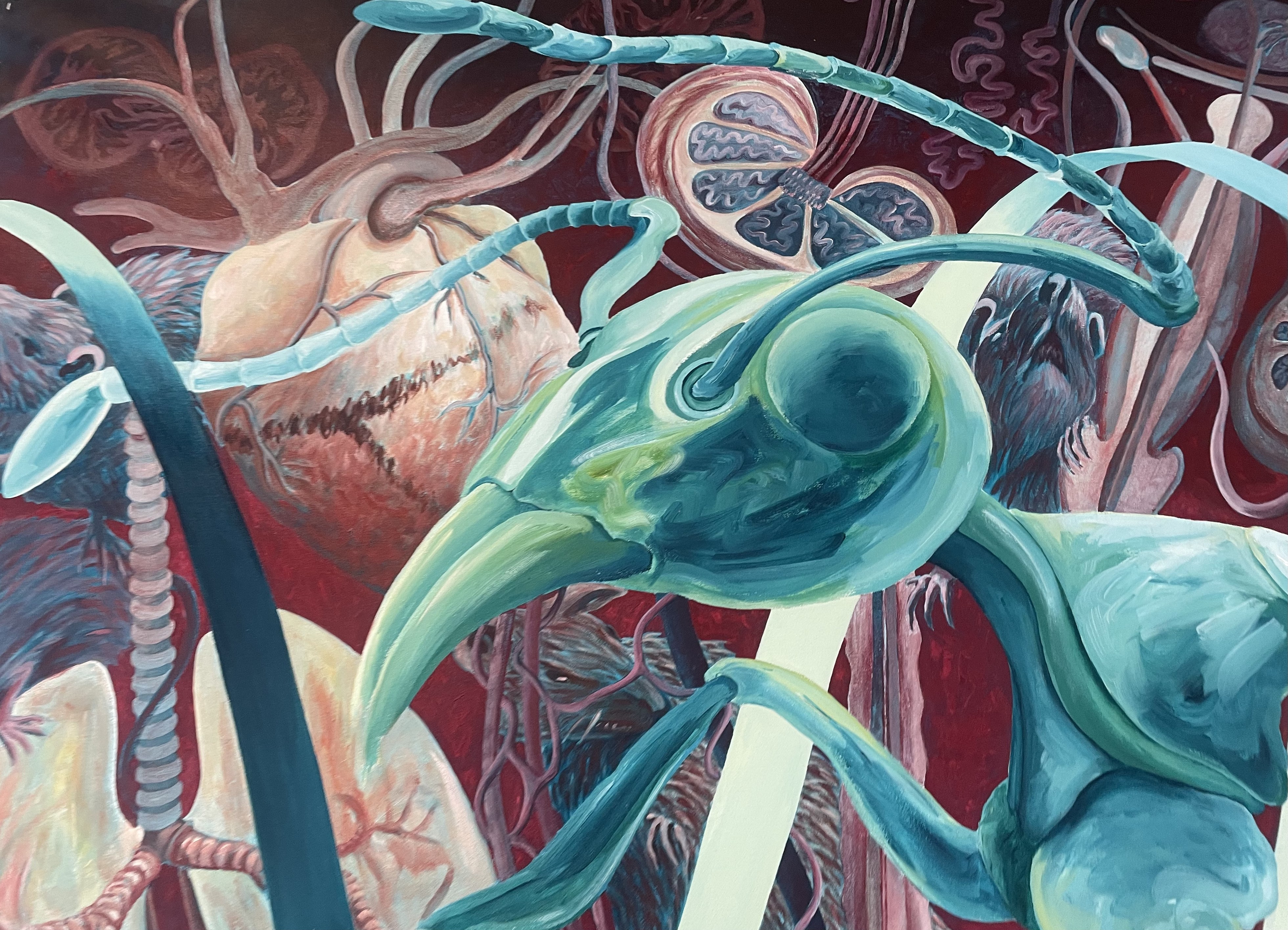
The ant is enclosed in a double-helix formation, spiraling from one side of the canvas to the other. This gives the impression that the creature is making its way through the spiral structure, which bears a resemblance to the double-helix shape of DNA. It becomes clear that there is more to this piece of art than what first meets the eye.
Without looking in depth, the next thing you might notice is the contrast in color between the ant and its surroundings. While the ant itself is featured in cyans and greens, the backdrop features a transition from vibrant reds and yellows to a darker, more burgundy color palette.
At the top of the canvas where the darker tones reside, it becomes clear that the ant is surrounded by an assortment of human organs and viscera, suspended into the canvas from somewhere above. Further back into the canvas is a series of cellular divisions, with a color scheme slightly lighter than the burgundy backdrop. The lack of contrast in these cell divisions makes them one of the last things you see in the painting. This layering effect creates a sense of depth and, in turn, satisfaction from a viewer who may find something new each time they view the artwork.
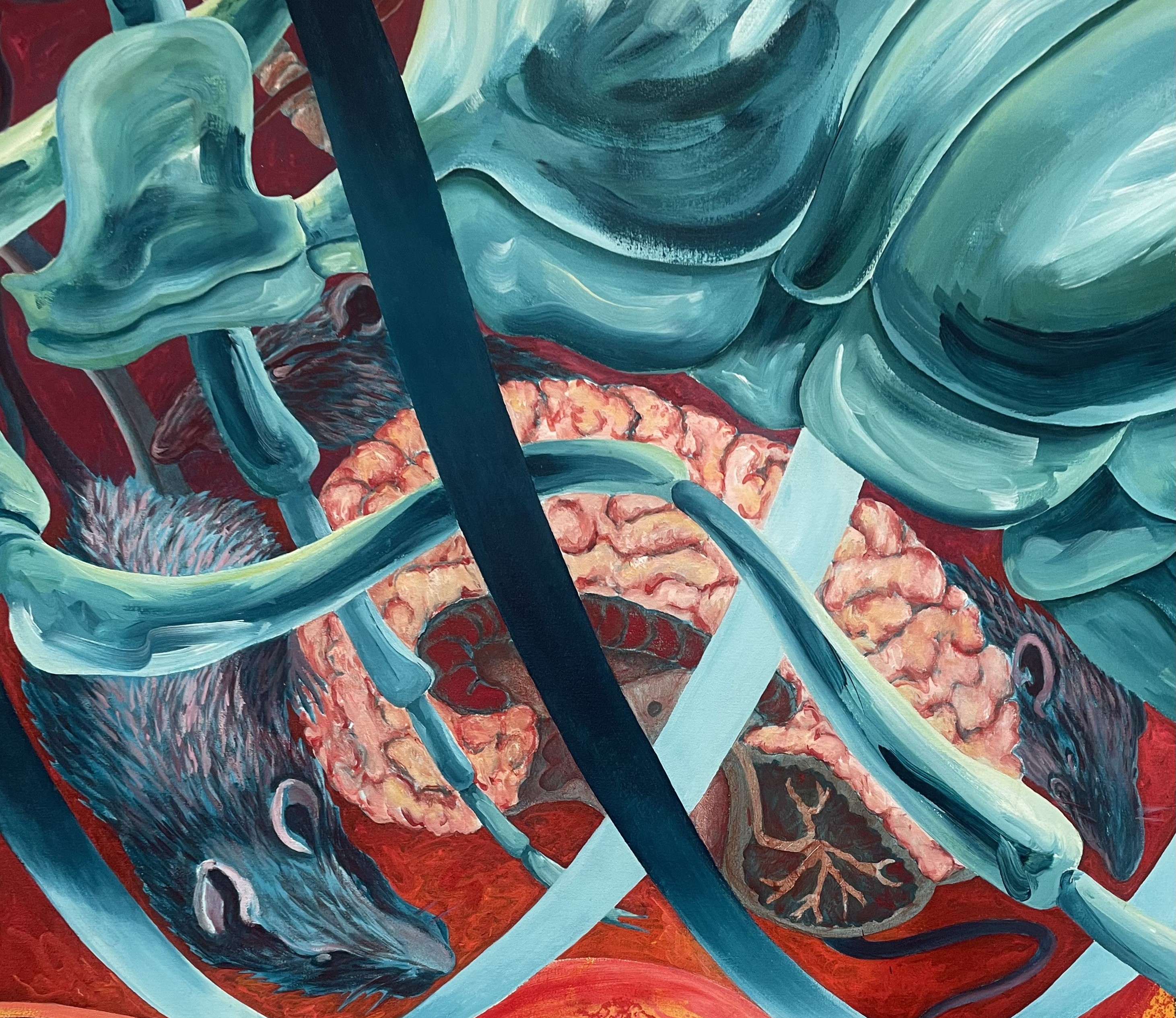
One of the most intriguing elements of this piece that you may miss on your first viewing is the series of rats intertwined with the organs, seemingly running rampant down the canvas towards the bottom, where further layers of the artwork can be seen.
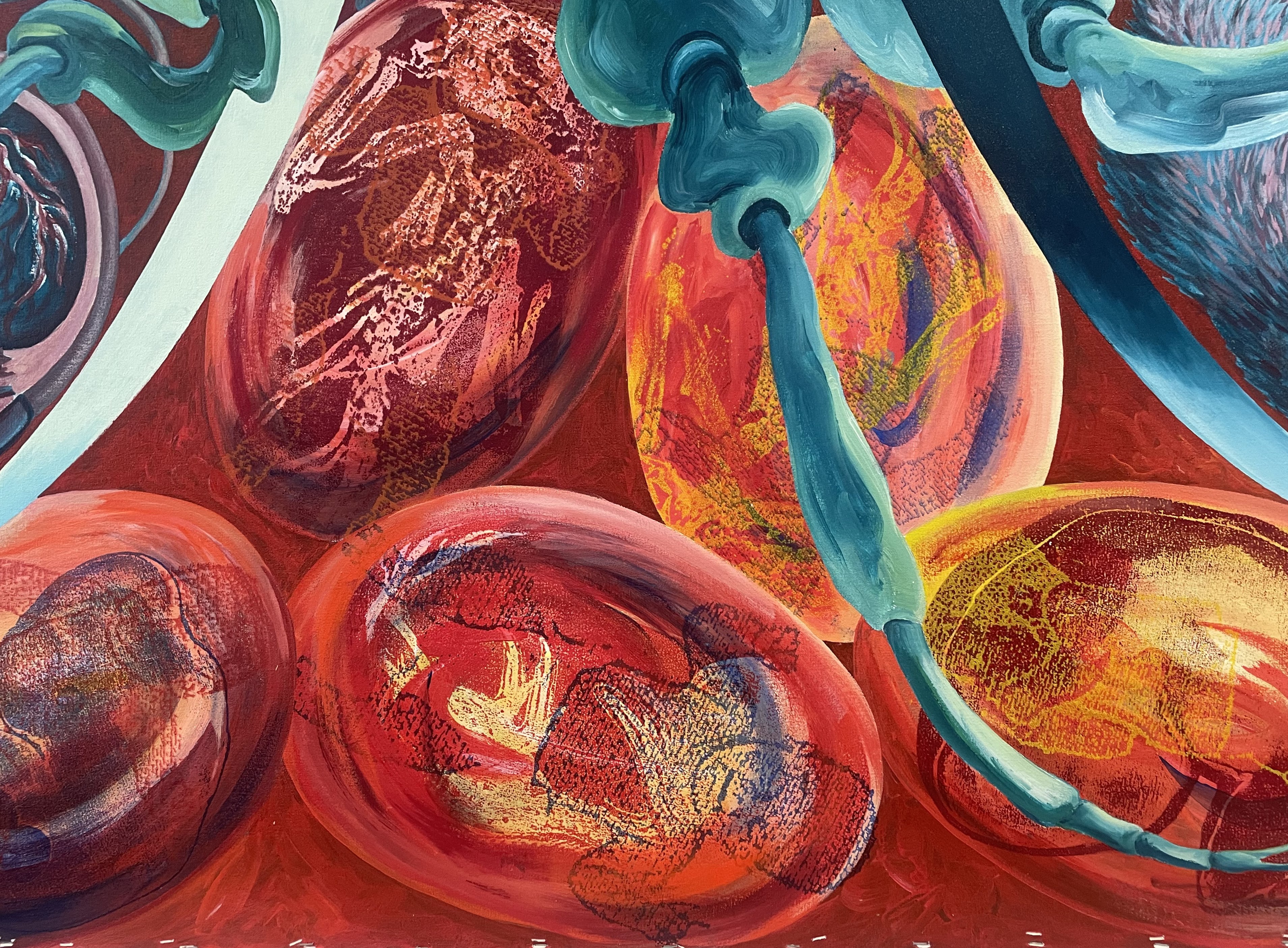
At the lowest region of the canvas, bathed in warm reds and yellows, there are a series of eggs, presumably left behind by the ant that hovers above. Looking closer at these eggs expands the depth of the artwork. It becomes clear that within these eggs (that you may have initially assumed were ant eggs,) there are human babies illustrated.
Understanding some of Hockenhull’s artistic motivations is helpful for interpreting some of the potential messages behind The Inheritors.
Her artwork has been described as examining the relationship between humans and the natural world, as well as incorporating scientific research into the art. As the Beijing Journal put it, “The edges between humans, animals, and plants begin to blur.” This can be seen clearly in The Inheritors, as themes of growth, life, death, and the organization of the animal food chain are examined in human and animal contexts, often overlapping each other.
Hockenhull herself has also stated that her work has incorporated the similarities between humans and the anatomy of animals, and that The Inheritors touches on “the persistence and interdependence of life forms.”
This is reflected in The Inheritors by the interconnected nature of life illustrated at various levels and how the different trophic levels interact with each other.
A series of human organs is on display, interwoven with rats, a symbolic lower form of life, often thought of as pests. These rats seemingly explore the internal human organs, rushing down the canvas towards the developing human embryos—a potential representation of life itself—looking for their next meal.
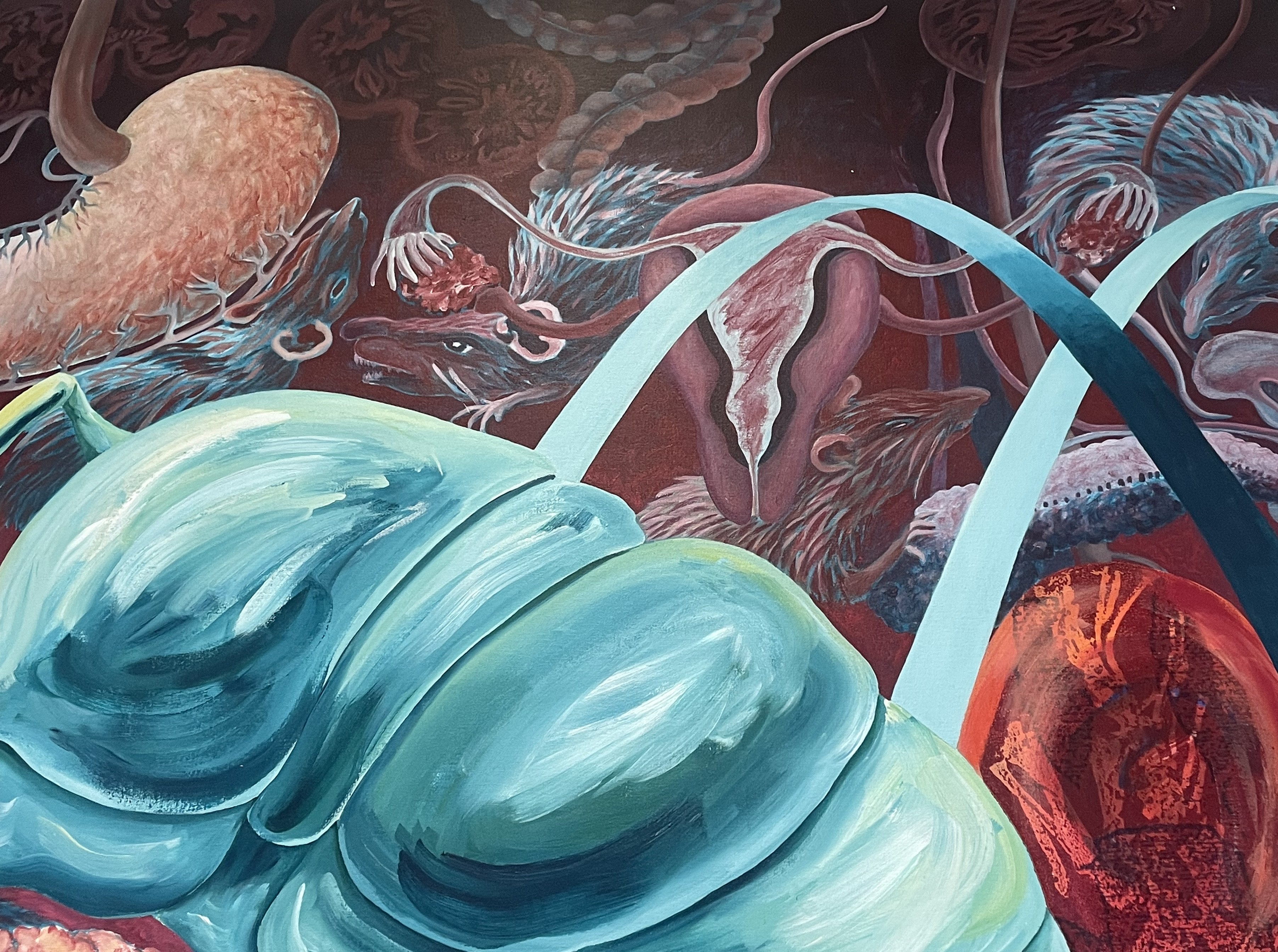
Simultaneously the ethereal ant, a possible representation of detritivores, does the same. Though, it seems to be a more persistent force of nature than a literal depiction, like the rats may be.
While this is just one person’s interpretation of the study room painting of VLSB, it seems that the artwork at its core shows these interactions and differing motivations between organisms. I would recommend heading over to VLSB and seeing this painting for yourself, as each viewer will have their own unique interpretations of this artwork.
You may also like
-
Rising Costs and No Sense of Community on Campus. Students Offer Feedback to WSU President Elizabeth Cantwell at Recent Listening Session
-
New Coug Orientation Goes Through a Revolution, As a Result of WSU’s Systemwide Reforms
-
The Silent Voices: A Chance to Tell Their Side
-
“Terrible” and “Complicated.” Students React to Trump’s State of the Union Address
-
Impressions of a WSUV Douglas Fir