To draw the attention of students, one must make an explosive impression. While the bath bombs made at a compounding workshop hosted by the WSU Vancouver Pre-Pharmacy Club and Pacific University on Feb. 11 in VMMC 16 weren’t blowing up much more than your anxiety, the prospects of a fun arts and crafts project demonstrate how teachers can open the door to resources and new experiences.
The event was primarily an educational resource for pre-pharmacy students about possible career opportunities. The making of bath bombs, or fragrant fizzy floating orbs for the bath, was featured prominently in the second half of the event. Two professors from Pacific University attended: Dr. Ryan Gibbard, chair of pharmacy practice; and Dr. Brendan Stamper, assistant dean for academic affairs. The event drew the attention of more than just the pre-pharmacy crowd, however, with a variety of majors in attendance, from other medical specialties to engineers.
The energy in the room was that of a casual experience, as the teachers and students cracked jokes and discussed various subjects. This expanse of thought was strong throughout: a constant blend of a casual and academic environment. The bath bombs, or “bumps,” as Dr. Gibbard called them (because only half of the mold was used in the recipe), are simple to make, and the ingredients are easily available online.
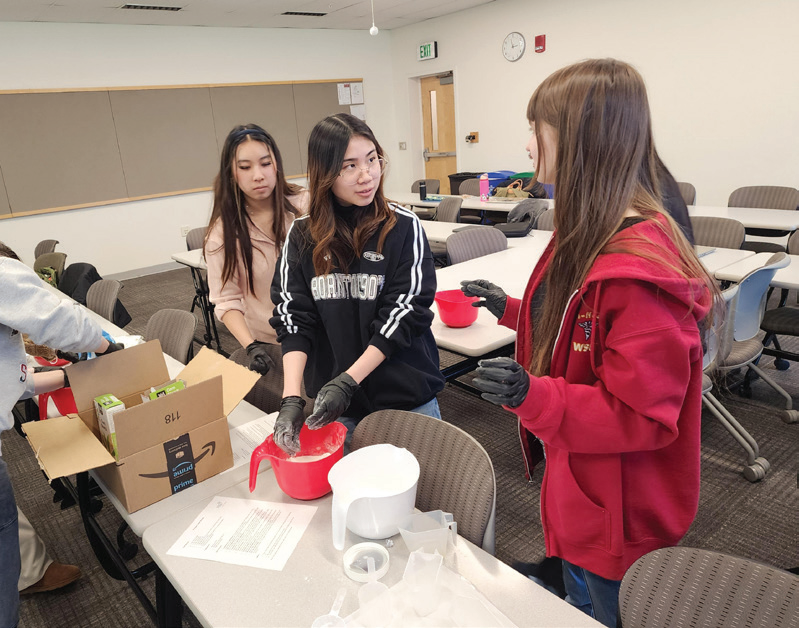
Students Queen Truong (left) and Minh Nguyen (center) participate in the Pre-Pharmacy club’s bath bomb workshop organized by club president Chloe Williamson (right). (Alex Cook/The VanCougar)
Ingredients:
1 cup baking soda
1/2 cup citric acid
1/2 cup cornstarch
1/2 cup Epsom salt
3 tablespoons of oil (coconut, olive, or almond oil work well)
1 tablespoon of water
Essential oils for fragrance (about 10–15 drops per batch)
Food coloring (optional)
Equipment:
Mixing bowls
Measuring cups and spoons
Bath “bump” molds (any small bowl should do)
Instructions:
Wear gloves if you can: while most of these ingredients are harmless, citric acid can be irritating to the skin.
Combine dry ingredients: in a large bowl, mix the baking soda, citric acid, cornstarch, and Epsom salt. Whisk to remove any clumps.
Mix wet ingredients: in a separate small bowl, combine the oil, water, essential oils, and food coloring (optional) and mix well. Avoid getting any of the mixture in your eyes.
Test the mixture: it should be damp enough to hold together when you squeeze it in your hand. If it’s too dry, add water a teaspoon at a time until it holds.
Pack the molds: press the mixture firmly into your mold. Overfill slightly, then press the mold firmly against a clean, dry surface.
Release the bath bombs: gently tap your mold to loosen the bath bombs, then carefully remove them and place them on a tray lined with parchment paper.
Dry the bath bombs: let them dry for at least 24 hours, or longer if your environment is humid. The longer they dry, the harder they will be, and the longer they will fizz.
As higher education changes around us, this workshop was a reminder that learning can be fun. Being able to mix a relaxed atmosphere with academics is a valuable skill in an educator’s arsenal. The creation of bath bombs is one example of many practices you may see around campus — so the next time you see a fun-looking event, ask yourself: What do they want to teach me? And go in ready to learn.