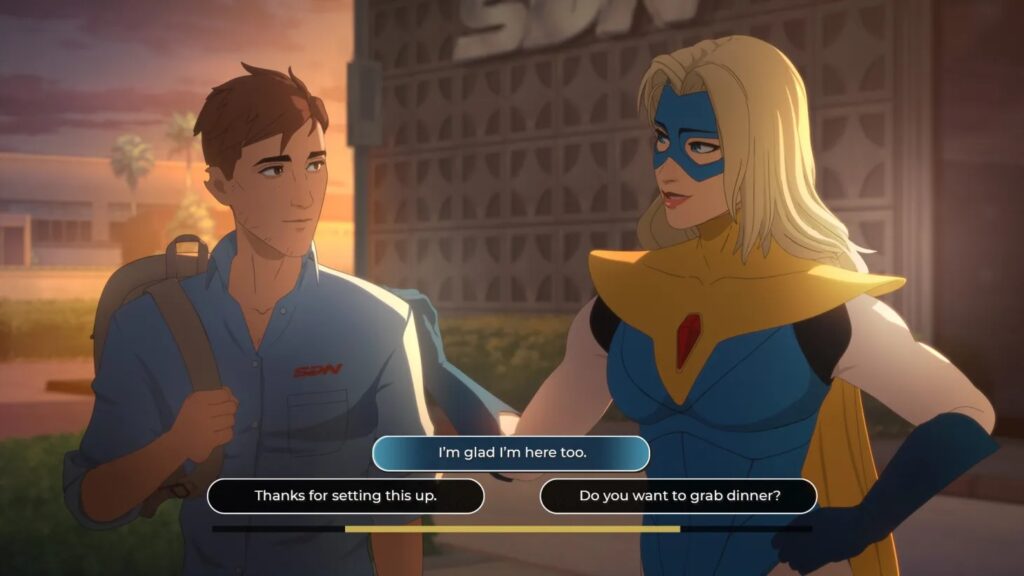
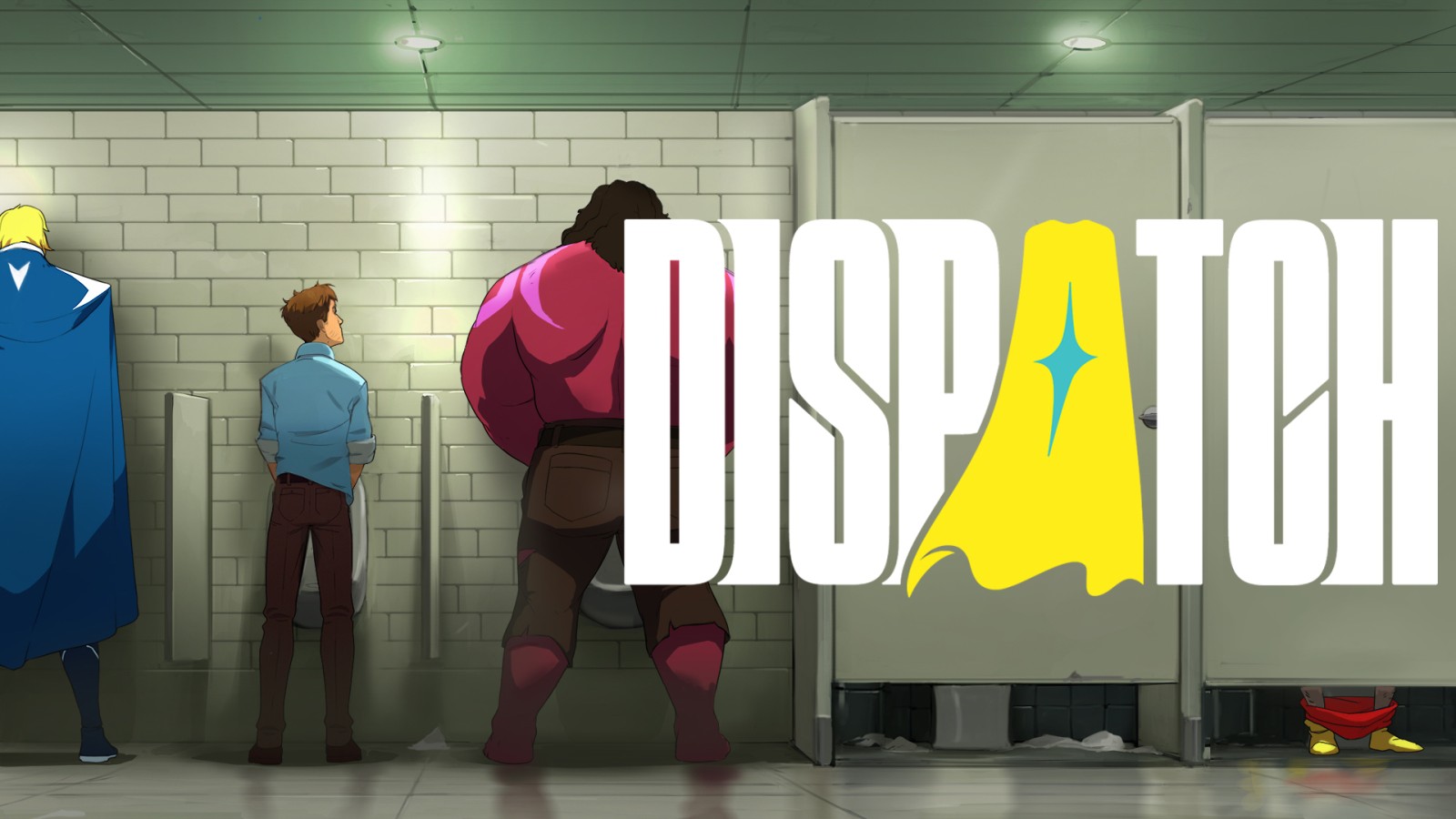
Dispatch, a genre-blending, real-time strategy, Telltale-style narrative game, released in October of 2025, stands out in the genre of dispatcher simulation games. Unlike traditional 911-operator simulators that focus on realistic dispatching, this game has you dispatching superheroes–or rather, ex-supervillains. The simulation segments are sandwiched between narrative cutscenes, which, in a sense, make Dispatch something like a superhero drama and office comedy, allowing the player to alter the story depending on dialogue choices and pass / fail outcomes in quick-time events.
You’ll play as Robert Robertson III, who goes by the alias Mecha-man Blue, the successor to his father, Mecha-man Astral. The first dialogue choice the player is met with asks what Robert’s opinion on his late father is. Without getting into spoilers, this spirals into a darker quest throughout Episode 1 which will ultimately change the direction of Robert’s life, where he will take a job as a dispatcher at Superhero Dispatch Network (SDN).
As the prologue concludes, the game settles into its primary gameplay loop: responding to emergency calls and dispatching ex-villains to handle situations, all the while juggling a limited roster of available heroes based on their abilities as well as their current condition. Some characters may be recovering from previous missions, already assigned elsewhere, or temporarily unable to respond, forcing the player to think carefully about every decision.
Unlike other 911 dispatcher simulators, the “units” you send out aren’t just interchangeable police cars without any defining significance, but are people with their own backstory, attitude, and a larger role in the story.
Because of this, decisions made outside of emergency response can directly affect how the dispatch system functions. Dialogue choices in office scenes influence how characters feel about Robert, which can determine whether they’re cooperative or resistant to taking on certain assignments, or absent from a work day altogether.
This humanizes the characters on the roster and adds extra weight to difficult decisions that impact the narrative. The cutscenes and dialogue explore themes of grief, redemption, and accountability, complicating player decisions as they will naturally develop their own feelings about each character before sending them out on a risky mission.
By framing the dispatch mechanics within an ongoing, character-focused story, Dispatch distinguishes itself from the pack by adding weight beyond resource efficiency to each decision the player makes. Every story is their own, informed by the choices the player chooses to live with.
You may also like
-
Rising Costs and No Sense of Community on Campus. Students Offer Feedback to WSU President Elizabeth Cantwell at Recent Listening Session
-
New Coug Orientation Goes Through a Revolution, As a Result of WSU’s Systemwide Reforms
-
The Silent Voices: A Chance to Tell Their Side
-
“Terrible” and “Complicated.” Students React to Trump’s State of the Union Address
-
Impressions of a WSUV Douglas Fir