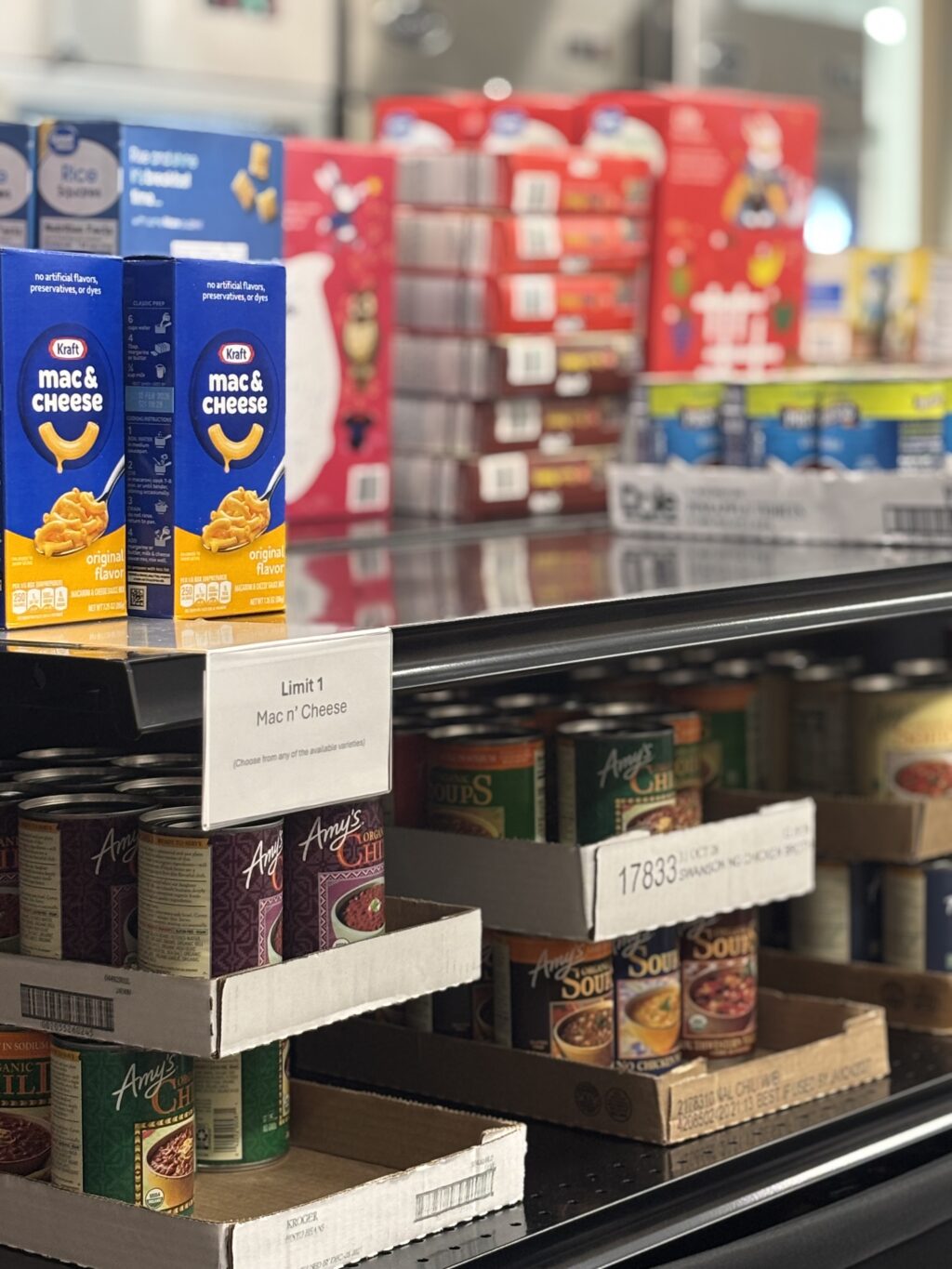
The Cougar Food Pantry is limiting its “Grab n Go” program to one meal a week per student. This is due to rising costs of food and demand at the pantry increasing by 66% between Spring and Fall of 2025.
The “Grab n Go” program allows students to take one ready-to-eat meal from the pantry and a small snack, in order to help students get through busy days. The new limitation was put into effect on January 20.
According to a data sheet provided by the pantry, there were more visits to the food pantry in fall of 2025 alone (1,552 visits) than the entirety of 2024 (1,539 visits). The data sheet also says that 24% of the student body uses the “Grab n Go” program.
Carmen Herrera, the Basic Needs Navigator on campus, said that consistently rising food costs is creating difficulty in projecting adequate funding in budget requests. She said it’s “coming to a point where we’re running out of funding that much sooner.”
“When we project it, we project it for the next year, and so when things come up, like, the cost of food rising, that’s not going to be something that’s factored in, even though we did try to project for a bit more,” Herrera said.
Herrera noted the importance of financial support from donors in helping the pantry continue operations, such as Mark Brubaker and Kristina Lockwood, a couple who donated a collective $82,000 to the pantry.
She noted that donation funds are often used as a backup when projected budgets fall short, allowing the pantry to continue purchasing food. “We still are able to utilize some of [those] donation dollars to get some of that food,” Herrera said, adding that donations help ensure students do not feel discouraged from visiting the pantry if supplies run low.
The pantry is in the process of trying to gain a partnership with the Clark County Food Bank, which would help offset some of the food costs and allow the pantry to spend toward other items that students may need.
In addition to seeking a partnership with the Clark County Food Bank, Herrera said the pantry is also looking into working with clubs on campus. They are asking for volunteers to assist with restocking shelves or with shopping days to buy more supplies. Work like this would help fulfill some volunteer hour requirements too.
“They can come in for shifts and help us out. … Whether it’s for, like, half an hour or two, an hour and a half, that’s, like, our greatest need. ”
You may also like
-
Rising Costs and No Sense of Community on Campus. Students Offer Feedback to WSU President Elizabeth Cantwell at Recent Listening Session
-
New Coug Orientation Goes Through a Revolution, As a Result of WSU’s Systemwide Reforms
-
The Silent Voices: A Chance to Tell Their Side
-
“Terrible” and “Complicated.” Students React to Trump’s State of the Union Address
-
Impressions of a WSUV Douglas Fir