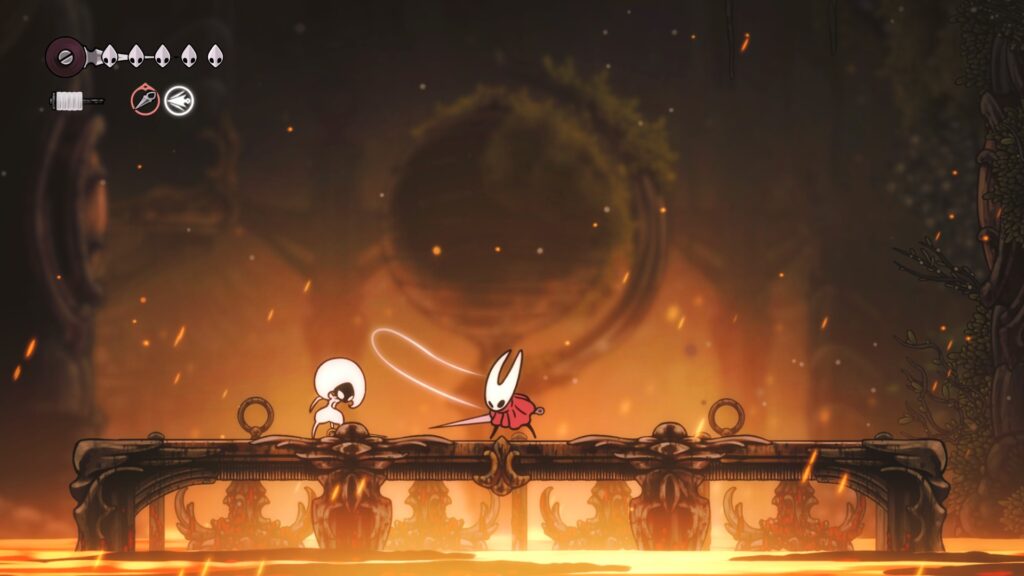
Hollow Knight: Silksong will change you.
It is not a game for everyone, nor does it intend to be one, but what Silksong does instead is aspire for a much greater goal. It will beat you to the ground and laugh at you, but getting up from that and conquering Pharloom, the kingdom in which the game takes place, is an unforgettable experience that stays with you long after you finish it.
Hollow Knight: Silksong was released in 2025 by developer Team Cherry. Silksong is the heavily anticipated sequel to Team Cherry’s first indie success, Hollow Knight. After seven years of anticipation, the game was finally released on Sept. 4.
However, the experience at launch was a struggle, with over 500,000 players playing on Steam alone at launch, making it nearly impossible to buy the game for the first few hours due to the increased traffic.
But once you had your hands on the game in contention for “Most anticipated video game release of all time,” how does it play?
The player controls Hornet, a beloved character from Hollow Knight, after the mysterious residents of Pharloom have kidnapped her. After you escape your bindings, you are tasked with ascending the kingdom in search of answers. The ascent mirrors the first game’s descent into the lands of Hallownest, and as you get used to the new protagonist’s controls, you learn three things:
1. Hornet replaces the simple downward pogo strike in the air from Hollow Knight with a diagonal dive, flinging you headfirst into danger.
2. Enemies deal far more damage in Silksong, but Hornet’s healing is stronger too: More risk, more reward.
3. Silksong hates you.
That’s not to say Silksong is adamant on making you quit, or that the game is poorly designed. Team Cherry initially designed Hollow Knight to be a challenging game, where death was a common occurrence. Unlike many sequels, Silksong subverts expectations by being designed around the people who beat the first game’s challenges. The typical reset in difficulty people expect from a sequel is gone; you might have hours of training from Hollow Knight, but you will feel like a new player again, and if you are playing Silksong first? Expect to get gatekept, hard.
This is where Silksong can alienate some. The game is not designed to be picked up and played; it is a direct follow-up to the first game. Silksong is not a game for everyone; it is for Hollow Knight fans ready for the next challenge.
But that challenge hides a beautiful world, with composer Christopher Larkin returning for Silksong, the music transports you to the haunted kingdom of Pharloom. From catchy boss tracks like “Cogwork Dancers” to the enchanting beauty of “Choral Chambers.” Silksong puts you in the world in every aspect of its design.
The harsh difficulty reflects on the cruel world Hornet finds herself in, and the struggle for resources parallels that of the kingdoms. You will find yourself wandering in a single direction for what feels like hours as the map opens up more and more. Many times I considered if Silksong was the first endless game, with new areas, enemies, and music appearing more than 60 hours in.
The writing is equally as enchanting. The gameplay often serves as the primary storytelling method, much like Hollow Knight. Still, Hornet is no silent protagonist, and the game has no qualms about baby-talking to you as Hornet discusses philosophy and the reality they find themselves in with flowery language befitting a game with such grand presentation. Oftentimes, a conversation comes to the player after you have already figured out the story the game wants to tell you. Instead of repeating the obvious, the game jumps ahead to discuss the broader implications. Just like its gameplay, Silksong refuses to hold your hand, and its unending respect for the player asks you to step up before it steps down for you.
For those willing to take on the challenge of scaling Pharloom, here are a few suggestions to ease the journey:
1. Explore, Explore, Explore.
Silksong is a “metroidvania,” a type of platformer designed around secrets that allow you to get stronger. Check every wall to see if it breaks, check every corner for secret goodies, and most importantly, if something seems too hard or impossible. Write it down on your map and come back later. Silksong punishes stubbornness more than anything else.
2. Use Everything at Your Disposal
There are no “dishonorable tactics” in a game designed to beat you; this means using the red tools the game gives you, which are often safer ranged weapons that can tear boss fights to shreds when used correctly. It also means never sticking too close to one strategy. The game grants you many options in how to approach each combat encounter, so think smarter, not harder.
3. It’s Okay to Fail.
It might feel weird to die in a game so frequently, but ultimately, each failure serves to teach you. Just like life, the best weapon you have is the ability to pick yourself up from a humiliating defeat and try again.
In Silksong, you can find anything in it if you look hard enough, but it simultaneously is not made for everyone. Silksong doesn’t hold back in its design and sometimes makes decisions seemingly only to mess with the player, to keep them on their toes. However, as the dance between the player and game continues, back and forth as they learn to survive in Pharloom, it is an experience like no other. It’s a game I highly recommend, because even if only one person plays and completes it, the sheer impact of the experience is enough to justify this article.
You may also like
-
Rising Costs and No Sense of Community on Campus. Students Offer Feedback to WSU President Elizabeth Cantwell at Recent Listening Session
-
New Coug Orientation Goes Through a Revolution, As a Result of WSU’s Systemwide Reforms
-
The Silent Voices: A Chance to Tell Their Side
-
“Terrible” and “Complicated.” Students React to Trump’s State of the Union Address
-
Impressions of a WSUV Douglas Fir