Professors are feeling increased pressure to self-censor what they say in class lectures in light of the current political climate, as revealed by recent interviews with WSU Vancouver faculty.
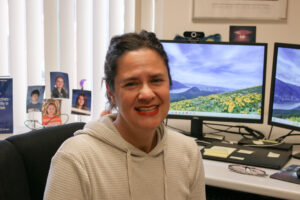
Professor Desiree Hellegers, the Director of the Collective for Social and Environmental Justice, talked about how WSU leadership’s silence and unwillingness to join their fellow universities in standing against federal directives that effectively police the use of specific words and ideas is “a really troubling development.” She emphasized that these actions “send a signal to us about what we can or can’t expect if we kind of…run afoul of some of these moves that are clearly designed to censor.”
On February 14th, 2025, The Trump administration sent out a “Dear colleague” letter demanding federally funded schools cease promoting ideas of diversity, equity, inclusion and the existence of systematic racism as it violates Title IV of the Civil Rights Act of 1964. The letter said that institutions that would fail to comply could lose their federal funding.
In late April, a statement by the American Association of Colleges and Universities (AAC&U) and the American Academy of Arts & Sciences was sent in response to the Trump administration letter. As of 12/1/2025 there are 666 signatures from leaders of universities all over the country, including University of Washington and its satellite campuses, Western Washington, Central Washington, and Eastern Washington. No representative from WSU signed, nor has WSU President Cantwell made any public statement about it.
Hellegers said the glaring absence of WSU’s signature is a “very troubling indication” and it is extremely hard to feel supported in her work. “When you can stand in solidarity with 500 other universities and you decide instead to kind of step outside of that Ring of Safety, that’s, I think, a really concerning sign. Your silence will not protect you, right?”
Some professors expressed more supportive views on the university administration regarding the issue.
When asked about how the administration has affected his work in class, Michael Rabby, a DTC professor said “I think all of us just are having to be more conscious of what we say, [the university administration] is under a lot of pressure, and, I’ll actually say I think they are doing about as good [of] a job as they can.”
Mark Stephan, an Associate Professor of Political Science, said WSUV “[has] had to make some adjustments in language” with regard to
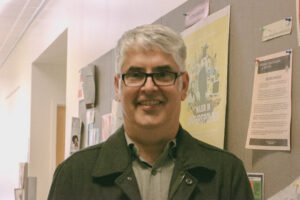
diversity, equity, and inclusion language, but emphasized that “The state of Washington is much more behind us as State Universities.” Stephan felt that the changes were more “cosmetic”, but that it “still matters, that we’re changing the language and changing the words and stuff, but it doesn’t feel as deep.”
Shortly after the original Dear Colleague letter, a statement was posted on the now defunct website for the center of equity and diversity:
“Our efforts align and comply with current state and federal law, including the Fourteenth Amendment to the United States Constitution, Title VI of the Civil Rights Act of 1964 and the Students for Fair Admissions v. Harvard decision of the United States Supreme Court (the State of Washington banned affirmative action in public universities and employment in 1998). We are continuing to review our efforts to ensure alignment and compliance.”
This statement was removed a month later.
When asked about more direct censorship in their classes, some professors admitted there had been talks about what they could/couldn’t say in class during staff meetings around DEI, but nothing had been put down on paper or really enforced.
When asked about direct censorship of her speech in class, Hellegers said “There’s been a lot of care to not put a lot of that in writing, and that has been disturbing to many faculty. What you don’t say in writing, you’re apparently not accountable for.”
She notes the changes of language on her website, which she had no ability to prevent. “Even the edits to our website and that kind of censorship, very little of that is in writing.”
Stephan admitted that the admin has had to change their language. “I’ve got some not faculty but administrators who I think have been sort of having to pivot their work a bit, because they’re not supposed to be focused on DEI.”
He stated, along with several other professors, that there had been no instruction on their speech in class. “As far as I can tell, faculty are

still using this language when they want to. In class for example for lectures and stuff.”
“We’re told we can say whatever we want in class.” Says Alair MacLean, a Professor of Sociology. She did state was worried that censorship was going to “spread more widely.”
Tahira Probst, a Professor of Psychology told the VanCougar that “There haven’t been any dictates from above in what we can and can’t say.” but emphasized worry about research freedom and the rising denial of research grants. When asked about the Trump Admin’s
attempts to reform higher
education she said she “Certainly worr[ies] about the chilling effect that it has had on academic freedom.”
The most common thing professors noted was having to change how they interact with their students — a form of quiet self-censorship they feel both in their academic and personal lives.
“You’re always self-editing a little bit,” said Rabby. “Y’know I’ve been teaching for more than 30 years and students are much more freaked out by things, they’re definitely more scared than they were 30 years ago…Campuses are the last bastions of free speech, they should be. And we should be able to express lots of different viewpoints.”
Stephan noted feeling the need to take a side politically when speaking.
“That’s the problem with the current sort of situation, is that, if I critique the president, as I have at times in class, I’m just perceived as anti-Trump,” he said. “And if I don’t critique the president, I’m seen as someone who is y’know, who’s willing to let the president slide. No one’s going to be satisfied.”
You may also like
-
Rising Costs and No Sense of Community on Campus. Students Offer Feedback to WSU President Elizabeth Cantwell at Recent Listening Session
-
New Coug Orientation Goes Through a Revolution, As a Result of WSU’s Systemwide Reforms
-
The Silent Voices: A Chance to Tell Their Side
-
“Terrible” and “Complicated.” Students React to Trump’s State of the Union Address
-
Impressions of a WSUV Douglas Fir